 +38 050 933 51 60
 +38 093 369 29 10
After a heavy set, a sprint, or a round in the octagon, it is not just character and technique that decide the outcome. What decides it is the ability of the muscles to quickly generate energy for the next explosive effort. This is precisely where creatine possesses one of the strongest evidence bases among sports supplements: it helps you train harder, progress more steadily, and recover better between workloads.
It is not a magic powder or a substitute for discipline. Creatine works best where there is already a smart training program, sufficient protein, calories, sleep, and consistency. But for an athlete looking to add weight to the barbell, repetitions to working sets, or explosiveness in functional training, it is a practical tool with a predictable outcome.
How creatine works in the muscles
During short, intense efforts, the body utilizes adenosine triphosphate – ATP. Its store in the muscles is small, so a rapid restoration of energy is required to continue heavy work. Creatine, in the form of phosphocreatine, participates in this process: it helps resynthesize ATP faster.
In practice, this can mean one more high-quality repetition in the squat, higher power in a sprint, better work density in a crossfit complex, or a smaller drop in strength between rounds. Not every workout will suddenly become a record-breaker, but over weeks and months, the additional volume of quality work accumulates. It is this volume that creates the conditions for gains in strength and muscle mass.
Creatine also increases the water content inside muscle cells. Because of this, body weight may increase by approximately 1-2 kg at the start of intake. This is not fat or undesirable bloating: it primarily refers to intramuscular water. For those working on mass and strength indicators, such an effect is frequently a plus. However, athletes for whom the weight class prior to weigh-ins is critical should take this into account in advance.
Who creatine gives the greatest advantage to
Most clearly, its effect is noticeable in strength training, bodybuilding, powerlifting, weightlifting, sprinting, team sports, MMA, and crossfit. Wherever work consists of short intense intervals and repeated efforts, supporting energy systems is highly appropriate.
For those gaining muscle mass, the supplement can help increase performance in basic movements and support a larger training volume. During cutting, creatine does not lose its sense either: against a background of calorie deficit, it helps preserve strength indicators, and therefore – maintain the stimulus for the muscles.
Beginners do not need it on their first day in the gym, when it is more important to establish proper technique and get used to the routine. At the same time, after several weeks of stable workouts, creatine can become a logical first sports addition. Vegetarians and vegans sometimes experience a more noticeable effect, as they typically receive less creatine from food than people who regularly consume meat and fish.
Which form of creatine to choose
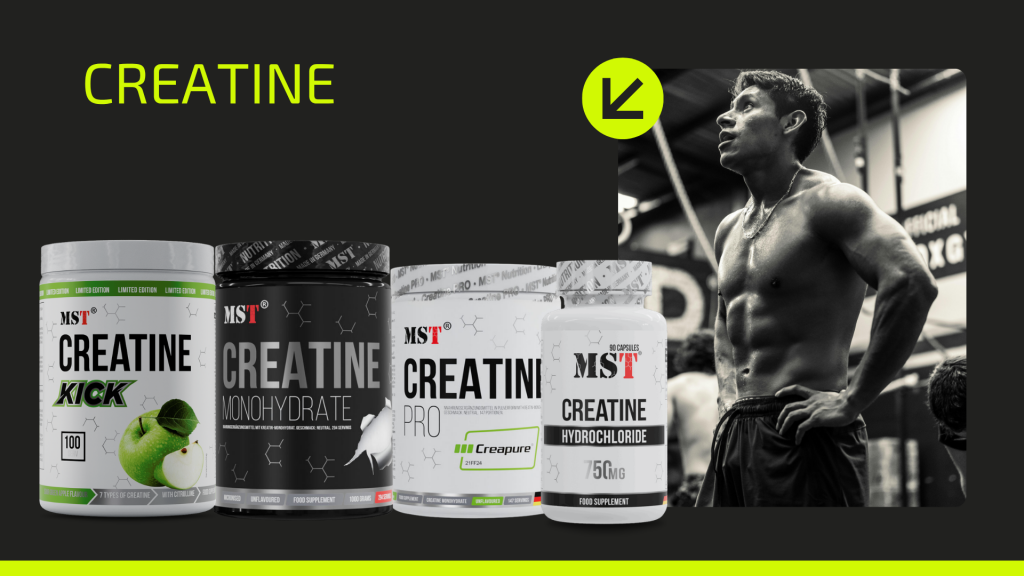
Creatine monohydrate is the standard against which all other forms are compared. It is well-studied, effective, stable, and typically offers the best balance of price and results. If you do not know where to start, monohydrate will be a well-founded choice.
Buffered, hydrochloride, and other forms also exist. They may differ in solubility, taste, or subjective comfort for the stomach. However, there is no convincing data that they systematically outperform high-quality monohydrate in increasing strength or muscle mass. Paying more is only worth it if a specific form is genuinely better tolerated by you specifically.
For a premium choice, evaluate the formula transparency rather than a loud label. The amount of the active substance must be clearly indicated per serving, without hidden blends or unnecessary stimulant overload. Flawless quality begins with raw material and manufacturing control, not with promises of instant results.
How to take creatine daily
The simplest and most functional scheme is 3-5 g of creatine monohydrate daily. For most athletes, this is sufficient to gradually saturate muscle stores. The dose is taken on both training and rest days, as consistency of use, rather than a one-off serving before the gym, is what matters key.
Timing is not critical. You can add a serving to water, a protein shake, or drink it alongside a meal – choose the option you will not forget. Post-workout is convenient for those who already have a habit of drinking a shake, but there is no specific advantage over morning or afternoon intake for most people.
A loading scheme involves about 20 g per day, split into four servings, for 5-7 days. It saturates the muscles faster, but it is not mandatory. Without a load, results will simply manifest gradually, in about 3-4 weeks. Many athletes find it more comfortable to maintain a stable 3-5 g per day from the start.
If discomfort in the stomach appears after a serving, try reducing the single dose, splitting it into two servings, or stirring the powder more thoroughly. There is no need to compensate for a missed day with a double amount the following day – simply return to your normal schedule.
Safety, water, and realistic expectations
For healthy adults, creatine monohydrate in recommended doses is considered a well-researched and safe supplement. The widespread myth that it inevitably harms the kidneys is not supported by studies involving healthy individuals. But the supplement does not replace common sense: in the case of diagnosed kidney diseases, pregnancy, breastfeeding, or taking medications, you should first discuss its use with a doctor.
Water is needed not because creatine supposedly dehydrates the body. Rather, sufficient hydration is a baseline condition for strength, endurance, concentration, and thermoregulation. Rely on thirst, training intensity, temperature, and urine color, rather than a mythical fixed figure for everyone.
Do not expect the supplement to replace a training program or carve out definition without nutritional control. It enhances a system that is already working. If sleep lasts five hours, protein in the diet is insufficient, and workouts are chaotic, even the highest quality creatine will not fix fundamental errors.
What to combine it with for results
Creatine integrates perfectly into a baseline sports strategy. Protein helps cover the daily protein requirement, carbohydrates support intense work, omega-3s can be a useful addition for general health, and magnesium is beneficial for those who fall short on it in their diet. Pre-workout complexes with caffeine can be used as needed, but they do not replace daily creatine support.
It is not mandatory to collect a massive shelf of supplements to progress. For many, high-quality protein as needed, creatine monohydrate, and a normal diet are sufficient. MST® Nutrition supports precisely this approach: selecting sports nutrition for a specific goal, rather than buying everything at once.
A stable serving of creatine, heavy workouts with progression, and compromise-free recovery form a combination worth evaluating over time, using your own numbers in your training log. Results love systematic structure.