 +38 050 933 51 60
 +38 093 369 29 10
After a hard workout, lack of sleep, or a period of high stress, the body doesn’t get weaker overnight. However, when intense workloads are paired with a nutrient deficiency, recovery slows down, energy drops, and seasonal colds can easily throw you off track. That is why top immunity vitamins should be chosen based on the body’s actual needs, ingredient profile, and consistency of intake, rather than a flashy label.
The immune system doesn’t work like a button that can be pushed with a single capsule. It requires sleep, proper nutrition, adequate protein, workload management, and specific nutrients. Supplements do not replace this foundation, but they do help close the gaps when your pace of life, diet, or training regimen demands it.
What it Means to Support the Immune System, Not “Boost” It
Strong immunity is not about constant maximum activity. Its job is to recognize threats in time and work harmoniously, without overreacting. For someone training 3–6 times a week, this is especially relevant: intense gym sessions, running, martial arts, or crossfit require resources not only for the muscles but also for the recovery of all body systems.
Short-term physical activity supports health. However, an excessive training volume combined with a severe calorie deficit, lack of sleep, or a monotonous diet can create a completely different picture. In this case, vitamins work best not as “emergency protection,” but as part of a disciplined system: food, water, rest, smart training programming, and a quality nutrient complex.
It is important to distinguish between preventative support and the correction of a confirmed deficiency. If fatigue, frequent ailments, poor sleep, or a drop in productivity last for weeks, it is wiser to consult a doctor and get blood tests. This applies particularly to vitamin D, iron, B12, and folates: taking high doses at random is not an athletic approach.
Top Vitamins for Immunity: Key Nutrients
Vitamin D — The Foundation for the Sunless Season
Vitamin D is involved in immune cell function, supports bone and muscle function, and enhances overall well-being. In Ukraine, its deficiency is particularly widespread during the autumn and winter periods when sunlight is scarce and most of the day is spent indoors.
For an athlete, this is not a secondary nutrient. Optimal vitamin D levels are linked to quality recovery, muscle performance, and the readiness to train consistently. At the same time, its dosage depends on age, diet, season, body weight, and test results. For daily support, choose a product with a clearly stated number of international units (IU) per serving, and coordinate higher doses with a specialist.
Vitamin C — Support Under Heavy Workloads
Vitamin C is essential for the normal functioning of the immune system, collagen synthesis, and antioxidant protection. It is especially useful when the diet lacks vegetables, berries, greens, citrus fruits, or bell peppers. For active individuals, an additional benefit is its role in forming collagen structures, which are vital for ligaments, tendons, and skin.
But more is not always better. Constant megadoses can cause digestive discomfort and, in some cases, require caution due to the risk of kidney stones. A regular intake of a moderate dose alongside a diverse diet is significantly more effective.
Zinc — A Trace Element for Protective Processes
Zinc is not a vitamin, but the list of key nutrients would be incomplete without it. It plays a role in immune cell function, protein synthesis, tissue repair, skin health, and a normal sense of taste and smell. It is a crucial mineral for those who train intensely, restrict calories, or rarely consume seafood, meat, legumes, and pumpkin seeds.
Precision is key with zinc. Long-term intake of excessively high doses can impair copper absorption. Therefore, check the amount of elemental zinc per serving, avoid doubling up on it across multiple products simultaneously, and do not turn the supplement into a permanent “heavy” cycle without necessity.
B Vitamins — Energy for the Routine, Not a Stimulant
Vitamins B1, B2, B3, B6, B9, and B12 do not provide an instant pre-workout kick like a pre-workout blend. Their strength lies elsewhere: they are involved in energy metabolism, nervous system function, blood cell formation, and processes that maintain daily stamina.
A B-complex can be beneficial if you have an irregular diet, a fast-paced work life, restrictive diets, or follow a vegan lifestyle. However, if your diet includes enough high-quality protein, grains, greens, eggs, and dairy products, the need for a separate complex might not be high. For B12 in individuals on plant-based diets, the matter should be addressed individually with a physician.
Omega-3 — Not a Vitamin, But a Powerful Ally
Omega-3 fatty acids are also not vitamins, yet they logically complement a health support program. EPA and DHA are important for the cardiovascular system, brain, vision, and the regulation of inflammatory processes. For those who regularly stress their joints, track their recovery, and rarely eat fatty marine fish, high-quality omega-3s can be a practical solution.
Evaluate the actual amount of EPA and DHA per daily serving rather than just the “fish oil” label on the package. This specific metric helps you understand the product’s true value. If you take anticoagulants or have a blood clotting disorder, the supplement must be discussed with a doctor.
How to Choose a Complex Without Superfluous Ingredients
A high-quality product does not need to contain twenty components in symbolic doses. Sometimes, the best strategy is a basic multivitamin, while other times, standalone D3, zinc, or omega-3 tailored to your diet and lifestyle will work better. The main thing is to understand your goal.
When making a choice, pay attention to four things:
- transparently declared doses of each active ingredient;
- clear forms of nutrients and the absence of unnecessary duplication;
- manufacturing quality control and brand reputation;
- a format you will actually take every day — capsules, tablets, liquid vitamins, or powder.
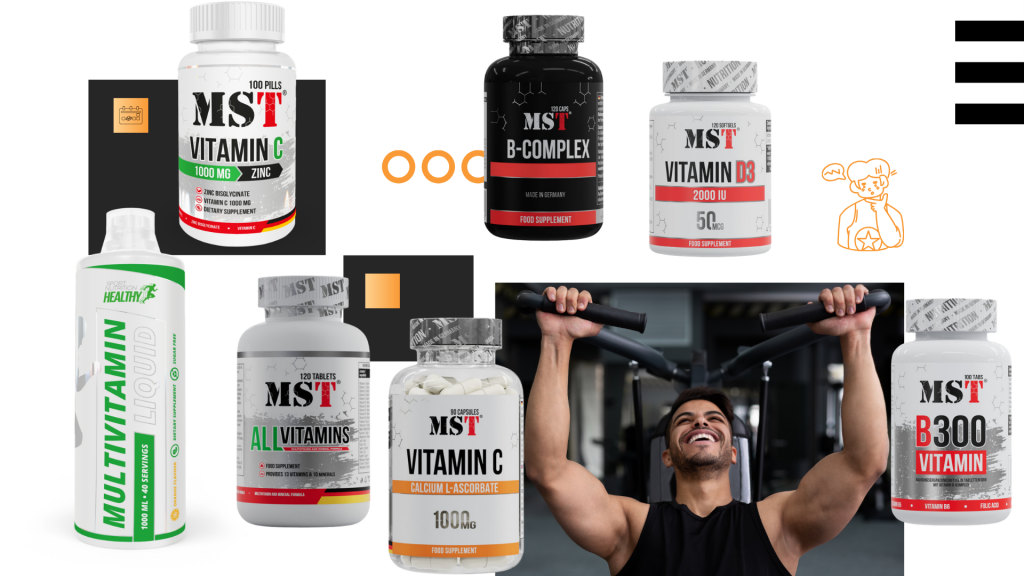
For an individual with intense training, the foundation could be vitamin D during periods of low sun activity, omega-3 if fish is lacking in the diet, and a balanced micronutrient complex. For those focusing on aesthetics and ligament recovery, collagen with vitamin C is often added to this base. In the MST® Nutrition lineup, you should orient yourself precisely by your goal: daily health, recovery, joints, beauty, or athletic performance.
When and How to Take Supplements
Fat-soluble vitamins, particularly D, are generally better absorbed when taken with food containing healthy fats. Omega-3s are also more convenient to consume during meals — this reduces the likelihood of digestive discomfort. Water-soluble vitamins, such as C and the B group, can be taken in the morning unless the product instructions state otherwise.
There is no need to swallow everything at once right before a workout. Immune support works through consistency, not a single massive dose. A convenient intake at the same time every day yields better results than a flawless routine that you abandon after a week.
Safety is Part of the Result
Do not combine multiple multivitamins, do not exceed the recommended serving size, and carefully read the labels of sports complexes. Pre-workout formulas, drinks, or energy products may already contain B vitamins, making them easy to duplicate accidentally.
Pregnancy, breastfeeding, chronic illnesses, kidney, liver, or thyroid issues, or taking regular prescription medication are all reasons to obtain a personalized recommendation from a medical professional. If discomfort, a rash, or any other adverse reactions occur after starting a supplement, its use should be discontinued and a consultation sought.
Choose the formula that fits your diet, workload, and plan for the season, rather than the biggest bottle or the most aggressive marketing promise. It is this type of discipline that helps you maintain your pace in the gym, recover faster, and stay on track with your goals.