 +38 050 933 51 60
 +38 093 369 29 10
After a grueling workout, performance isn’t determined solely by the number of sets you completed. If your body lacks sufficient protein, energy, hydration, and micronutrients, progress stalls: muscle recovery slows down, working weights plateau, and motivation wanes. Sports nutrition is not engineered as magic in a bottle, but as a precise method to fulfill physiological requirements that are difficult to cover consistently through daily food intake alone.
For an athlete seeking to gain strength, build quality lean muscle mass, cut body fat without losing performance, or accelerate post-workout recovery, dietary supplementation offers a powerful advantage. However, supplements deliver maximum efficacy only when matched directly to your functional goals, training volume, and baseline nutrition.
Sports Nutrition Begins with Your Athletic Objective
No single supplement is universally required by every individual. A standard protein powder can help an office worker training three times a week meet their daily protein target, but it won’t replace a structured whole-food diet for a competitive bodybuilder in an off-season hypertrophy phase. Creatine is ideal for strength disciplines, sprinting, CrossFit, and combat sports, whereas omega-3s are chosen by high-performance athletes and fitness enthusiasts alike to support joint integrity and systemic wellness.
Start by answering three questions honestly: What specific physique or performance target are you pursuing over the next 8–12 weeks? Which nutritional gaps currently exist in your daily diet? What is your actual training load? Building muscle mass requires a consistent caloric surplus alongside sufficient dietary protein. Conversely, reducing body fat requires maintaining a caloric deficit, where fat-burning complexes serve merely as auxiliary tools to support daily energy expenditure and mental focus.
Avoid purchasing an exhaustive array of supplements all at once. A streamlined baseline of two or three well-chosen products outperforms an overly complex ten-product stack that is unsustainable over time.
Protein: The Foundation for Muscle Building and Appetite Control
Protein supplementation represents the most functional category in sports nutrition. Its true utility lies not in the powder itself, but in its ability to rapidly supply complete amino acids post-workout, between meals, or on the go. For most active individuals, daily protein recommendations range between 1.6 and 2.2 grams per kilogram of body weight. Exact targets vary according to caloric intake, training experience, age, and weekly volume.
Whey protein concentrate is a practical daily choice due to its complete amino acid profile and rapid digestion rate. Whey protein isolate offers an ideal alternative for individuals restricting lactose or aiming to minimize dietary fats and carbohydrates. Casein protein digests slowly, making it well-suited for sustained satiety before bedtime. Plant-based protein blends provide an effective option for vegans, provided total protein content per serving is verified.
Overall daily protein intake matters far more than precise nutrient timing. Consuming a post-workout shake is convenient, but if you have already consumed a complete, protein-rich whole-food meal, rushing to use your shaker bottle immediately is unnecessary. Long-term consistency drives results.
Creatine: Strength, Repetitions, and Progressive Overload
Creatine monohydrate remains one of the most thoroughly researched supplements in sports science. It rapidly replenishes intracellular adenosine triphosphate (ATP) during short, high-intensity muscular efforts. In practice, this enables extra reps on heavy sets, improves working weight capacity, and sustains peak force production during demanding sessions.
A standard dosage protocol is straightforward: 3 to 5 grams of creatine daily. It can be consumed at any time during the day, with or without food. A high-dose loading phase is not strictly required. Minor weight gain during initial supplementation usually reflects intracellular water retention within muscle tissue rather than fat storage.
Creatine cannot substitute for missed workouts or inadequate sleep. However, when paired with progressive resistance training, balanced nutrition, and adequate hydration, it yields reliable performance improvements.
Amino Acids and Pre-Workout Complexes: Strategic Application
While BCAAs are popular in fitness culture, their additional benefit is limited if your baseline dietary protein intake is sufficient. Essential Amino Acid (EAA) formulas supply a complete essential profile, making them beneficial during fasted early-morning training sessions, prolonged endurance activities, or periods with extended gaps between meals.
Select pre-workout complexes based on transparent label dosing rather than marketing claims. Caffeine enhances cognitive alertness and perceived energy, citrulline supports muscle pumps and endurance, and beta-alanine buffers intramuscular hydrogen ions during high-rep training. Because individual stimulant sensitivity varies, using a strong pre-workout before evening training sessions can disrupt sleep quality—negating recovery benefits.
Begin with a minimum serving size to assess tolerance, and avoid stacking multiple caffeine-containing products simultaneously. Individuals with cardiovascular conditions, elevated blood pressure, anxiety disorders, or women who are pregnant or nursing should consult a physician before using stimulant-based formulations.
Athletic Recovery Requires More Than Protein
Physiological adaptation occurs between workouts. When persistent joint discomfort, reduced mobility, or systemic fatigue lasts for days, taking extra stimulants is not the solution. Often, your body requires structured deload weeks, improved sleep hygiene, or dietary adjustments.
Collagen peptides serve as a valuable supplement for athletes subjecting tendons, ligaments, and articular cartilage to heavy impact—such as runners, combat sports athletes, powerlifters, and CrossFit practitioners. View collagen as a long-term preventive tool for connective tissue integrity rather than an acute treatment for injury. Experiencing acute joint pain or swelling warrants medical evaluation rather than self-prescribed supplementation.
Micronutrients like omega-3 fatty acids, vitamin D, and magnesium provide strong support when dietary gaps or physiological demands exist. Vitamin D dosing should be tailored based on blood panel results and professional guidance. A well-constructed supplement routine avoids unnecessary nutrient duplication across multiple products.
Selecting High-Quality Sports Nutrition
For products consumed daily, raw material sourcing and manufacturing quality standards are paramount. Look beyond front-label packaging and evaluate full ingredient disclosure: verify active ingredient amounts per serving, check for proprietary blends with hidden dosages, and confirm clear usage directions.
A quality supplement does not make unrealistic claims. Products promising instant muscle growth, extreme fat loss without caloric restriction, or hormonal changes without risks should be approached with skepticism. Quality sports nutrition is built on transparent labeling, raw material control, evidence-based dosing, and strict safety protocols.
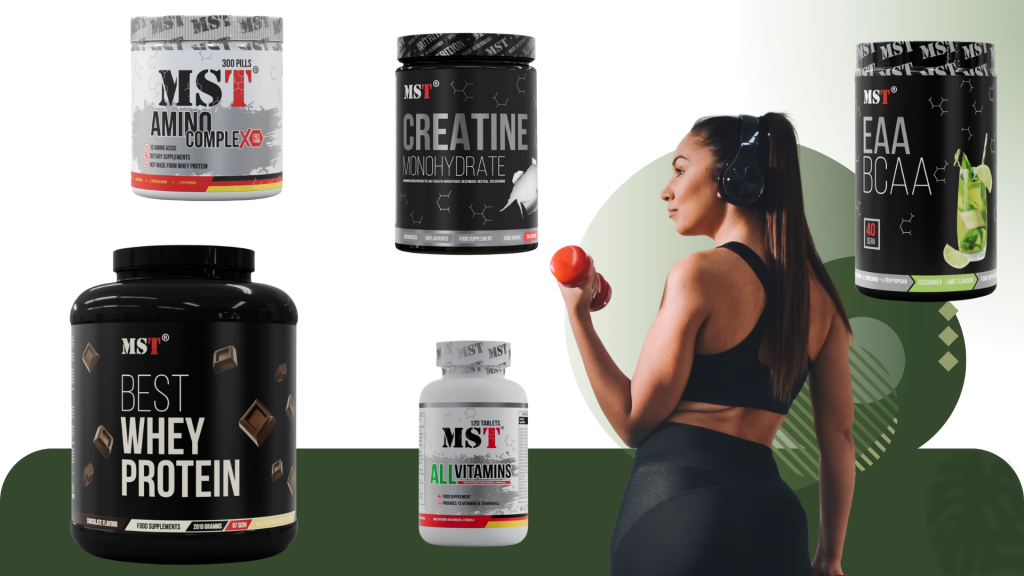
MST® Nutrition Ukraine offers functional categories aligned with specific goals: protein and creatine for strength and hypertrophy, amino acids for intense training phases, collagen for connective tissue support, and essential vitamins alongside omega-3s for baseline health. German manufacturing standards and trusted formulations ensure uncompromising quality for every athlete.
A Practical, Streamlined Starting Routine
For beginners training for strength and physique improvement, a solid foundation consists of meeting daily protein targets through whole foods and protein powder when needed, supplementing with creatine monohydrate daily, and covering foundational vitamins and minerals as indicated. For endurance or functional fitness, adding electrolytes, EAAs, or a transparent pre-workout formula offers practical support.
Advanced athletes require a more precise approach: aligning supplement stacks with seasonal training cycles, monitoring recovery metrics, assessing individual digestion, and ensuring full compliance with anti-doping standards. Higher training demands leave no room for guesswork.
The most effective supplement stack is one you can maintain safely, consistently, and with a clear functional purpose. Define your primary goal for the upcoming training block, structure your diet and recovery around it, and let sports nutrition serve as a precise tool to drive measurable results in your strength, physique, and athletic performance.