 +38 050 933 51 60
 +38 093 369 29 10
When the weight in the gym is growing, but the weight on the scale is standing still, the problem is often not about motivation. Most often, two things are missing – a systematic calorie surplus and a stable maintenance of strength indicators. This is exactly where creatine for mass gain becomes not a trendy supplement, but a basic tool for those who want to add muscle, rather than just accumulate fatigue.
Why Creatine for Mass Gain Works
Creatine is one of the most studied sports supplements in the world. Its value lies not in loud promises, but in the fact that it actually helps to train more productively. When muscles have more phosphocreatine stores, the body replenishes ATP — the main source of energy for short, powerful efforts — faster. This means more high-quality repetitions, slightly higher working weight, and better training density.
And now the main point: muscle mass does not appear out of thin air. It grows when you regularly create a sufficient training stimulus and give the body resources for recovery. Creatine does not build muscles for you, but it enhances the conditions under which gaining mass becomes more realistic and stable.
There is another point that is often discussed out of context: water retention. Yes, creatine increases the water content in muscle cells. For many, this sounds like a drawback, but during a mass-gaining period, it is rather a plus. The muscle looks fuller, and cellular hydration is associated with a more favorable environment for growth. It is only important to understand the difference between intramuscular hydration and bloating, which beginners are often scared with.
What Exactly Creatine Provides During a Gaining Period
In strength sports practice, creatine is valued not for a single effect, but for a combination of results. The first is an increase in strength and power. If you add at least 1-2 repetitions in key sets or work more confidently in heavy exercises, this already creates an additional stimulus for hypertrophy.
The second effect is better recovery between sets and between workouts. This does not mean that you can ignore sleep or nutrition, but it means that the body tolerates the volume of work slightly better. For athletes who train 4-6 times a week, this is a tangible advantage.
The third is a faster start to progress. Part of the weight gain at the beginning is indeed related to water in the muscles, but this does not make the result fake. If against this background you start training more productively, then a full-fledged muscle growth kicks in next.
Which Creatine to Choose
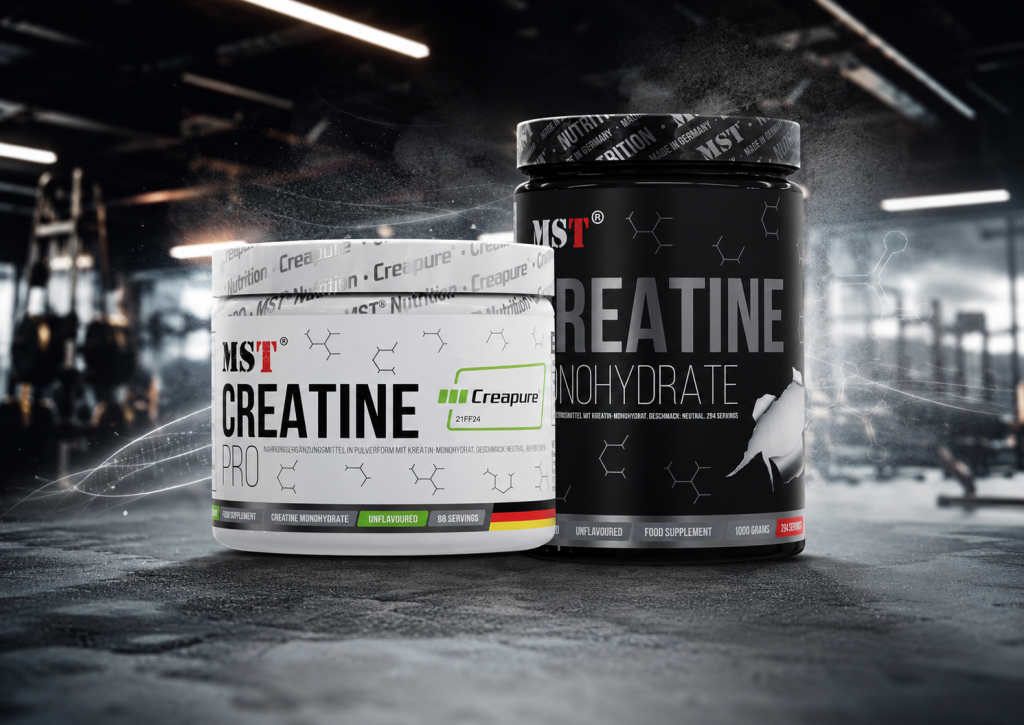
If your goal is a result, rather than collecting marketing names, the most practical choice is creatine monohydrate. It is this form that has the strongest evidence base, a stable effect, and a clear mechanism of action. It suits both beginners and experienced athletes, as well as those working for mass in bodybuilding, crossfit, or strength fitness.
Other forms exist, but often their advantage sounds better in advertising than it manifests in practice. If the product is high-quality, well-purified, and properly dosed, monohydrate covers the tasks without unnecessary overpayments. For a brand that bets on flawless quality and proven formulas, exactly such an approach looks professional, not just commercial.
How to Take Creatine for Mass Gain
The simplest and most working scheme is 3-5 g daily. Exactly daily, and not only on training days. The point is to gradually saturate the muscles with creatine and maintain this level constantly. The time of intake is not critical. You can drink it before a workout, after it, or with any meal, if it makes it easier for you not to miss a dose.
The loading phase is not mandatory. Yes, it allows you to saturate muscles faster, but for most people, it is not fundamental. If you take a standard dose regularly, the effect will just come a bit more smoothly. For those who value digestive comfort and stability, regular daily intake is often even better.
Creatine should be combined with a sufficient amount of water. Not because of scary stories, but because of common sense. If you train actively, sweat a lot, and at the same time don’t drink enough, productivity will drop regardless of supplements. Adequate hydration is part of the result.
What to Combine Creatine With for Faster Mass Growth
Creatine alone will not cover a deficit of calories and protein. If you want to gain quality mass, a surplus of energy, a sufficient amount of protein, progressive strength load, and recovery remain the foundation. It is against this background that creatine shows its maximum.
It works best in a system that includes a full diet, whey protein for convenient protein top-up, carbohydrates around workouts for energy, and quality sleep. For some athletes, a good synergy is provided by a combination with beta-alanine or pre-workout complexes, but that is already the second level. If the budget is limited, the priority is simple: food, protein if needed, creatine.
For athletes working at high intensity, creatine is especially appropriate. It is equally relevant for classic mass gaining in bodybuilding and for functional training, where repeated explosive efforts are important. Champions recommend not magic, but what actually strengthens the training process.
Who Creatine Suits Best
Those who already train regularly and want to move to a new level of strength and volume benefit the most. Beginners often react well too, because their body adapts quickly to the load, and creatine helps to make this start more productive.
Vegetarians and people who consume little meat and fish sometimes feel the effect even more noticeably. The reason is simple: their baseline level of creatine in muscles may be lower. But even for those who eat a mixed diet, the supplement remains effective, because getting a working sports dose solely from food is not that convenient.
A less pronounced effect sometimes happens in those who already have high muscle stores of creatine or train chaotically. If there is no system in nutrition and load, even the highest quality formula will not show its maximum.
Myths That Prevent Getting Results
The first myth is that creatine causes water retention that ruins the shape. In fact, it is mostly about water inside the muscle cells, rather than uncontrolled bloating. In the gaining phase, this often looks like a visual plus, not a minus.
The second myth is that creatine harms the kidneys of everyone without exception. For healthy people at an adequate dosage, this statement is not supported by data. It is a different matter if there are chronic kidney diseases or serious medical restrictions — then any sports supplements should be coordinated with a doctor.
Third myth — creatine needs to be taken in cycles. For most users, there is no practical need for this. If the supplement is tolerated normally, it can be used long-term, maintaining stable muscle saturation.
Another popular fear is that after stopping, everything immediately “deflates.” Part of the weight may indeed go away due to changes in the level of muscle hydration, but the muscles you gained thanks to training progress do not disappear in a few days. Not the entire result is lost, but part of the accompanying effect.
How to Understand That Creatine Is Helping You
The best markers are not the feelings of “pumping,” but dry numbers. See if working weights are growing, if repetitions are being added, if it is easier to keep the volume in basic exercises. If in 3-6 weeks you have become stronger, more stable in operation, and are gradually gaining weight without a sharp deterioration in shape, you are moving in the right direction.
You shouldn’t expect the same scenario for everyone. Someone notices the effect in a week or two, for someone it unfolds gradually. It is important to evaluate the result not separately from training and nutrition, but in tandem with them.
When Creatine Won’t Give the Maximum
If you sleep for five hours, eat randomly, and constantly change the program, creatine will not save the situation. It does not replace discipline. Likewise, it will not be a good tool for those who are afraid of a calorie surplus and are actually trying to dry out and gain mass at the same time without a clear strategy.
Another mistake is to expect the effect of steroids from creatine. This is a strong, scientifically proven, but still basic supplement. Its value lies precisely in reliability, safety when used wisely, and the ability to improve things that really lead to muscle growth.
If you build mass wisely, creatine is one of the cleanest and most effective tools in your arsenal. Without unnecessary noise, without marketing fairy tales, but with the result that is visible in working weights, volumes, and the mirror. In this approach lies the real sports logic: not to look for complex solutions when proven ones work.