 +38 050 933 51 60
 +38 093 369 29 10
After a heavy workout, it is not the number of jars in your cabinet that matters, but whether you have met a specific need of the body: protein for muscle growth, energy for productive work, nutrients for recovery, or joint support. This guide to sports supplements will help you build your own system without random purchases, duplication of components, and loud promises with no real meaning.
Supplements do not replace a training plan, sleep, and a well-rounded diet. They reinforce the foundation when calories, protein, water, and regularity are already in place. That is why the right choice begins not with a popular product, but with your goal for the next 8–12 weeks.
Sports Supplements Guide: Start with a Goal
If your goal is to gain muscle mass, the priority will be a sufficient amount of protein in the diet and a stable calorie surplus. If you are working on strength, creatine and quality recovery become relevant. For endurance workouts, carbohydrates, electrolytes, and hydration control are essential. During weight loss, supplements should help preserve muscle, control appetite, and maintain energy, but not create the illusion that a calorie deficit is no longer necessary.
Identify one primary priority. For example, an athlete preparing for a Crossfit competition should not simultaneously chase maximum mass gain, aggressive fat burning, and testing five new complexes. A clear goal makes it possible to evaluate the result: working weights, measurements, recovery rate, endurance, sleep quality, or changes in body composition.
A beginner only needs a basic setup. An experienced athlete requires finer tuning based on training load, weight class, cardio volume, and competition schedule. A one-size-fits-all scheme does not work — but there are products with predictable roles.
The Foundation for Strength and Muscle
Protein: A Convenient Way to Meet Your Protein Norm
Protein is not a separate secret to growth, but a practical source of complete protein. It is especially useful when there is no opportunity to prepare a meal after the gym, when it is difficult to hit the daily norm from whole foods, or when you need to add protein without extra fat and sugar.
Whey protein is well-suited after a workout and at any time of the day. Isolate is often chosen by those monitoring calorie intake or who are lactose intolerant. Casein is absorbed more slowly, making it convenient between meals or in the evening. Plant-based formulas serve as an alternative for people who do not consume dairy products, though here you should look more closely at the amino acid profile and the amount of protein per serving.
The guideline for those training for strength or hypertrophy is approximately 1.6–2.2 g of protein per kilogram of body weight per day from all sources. The exact need depends on activity level, calorie deficit, and training experience. It is not mandatory to drink a shake within the first ten minutes after the last set: closing the overall daily norm is what matters most.
Creatine: A Resource for Repeated Efforts
Creatine monohydrate is one of the most thoroughly studied options for strength disciplines, bodybuilding, sprinting, and functional training. It supports the energy system during short, intense efforts, which can contribute to progress in strength, explosiveness, and training volume.
The practical scheme is simple: 3–5 g daily, taken at a convenient time, with consistent usage. A loading phase is optional. A small weight increase at the start is often associated with water retention in the muscles, rather than fat mass gain. If you have kidney disease, take medications, or have other medical restrictions, the decision to take creatine should be coordinated with a doctor.
EAAs and BCAAs: When They Are Justified
Essential amino acids (EAAs) can be appropriate when you train on an empty stomach, have long sessions, restrict calories, or cannot eat properly before a workout. BCAAs have a narrower composition. If your diet already includes enough complete protein and a serving of protein powder, a separate need for BCAAs is often minimal.
Honesty regarding your own diet is key here. Amino acids will not compensate for a systematic lack of protein, just as a pre-workout complex cannot fix sleep deprivation.
Energy During Training: Pre-Workouts and Electrolytes
A pre-workout complex can be useful before a morning session, a heavy leg day, an intense sparring match, or a workout after a long workday. Typically, these formulas combine caffeine, components for concentration, and substances that support the feeling of work capacity. However, the effect depends on the ingredient list, dosages, your sensitivity to stimulants, and your tolerance to caffeine.
Do not judge a pre-workout product solely by intense tingling or a sudden rush of energy. Check the label, do not mix it with multiple energy drinks, and avoid using it in the evening if it impairs your sleep. One night of missed sleep can undo the benefits of even the best training session.
For running, cycling, football, martial arts, and training in the heat, electrolytes are frequently undervalued. Sodium, potassium, and magnesium help maintain water-salt balance, especially during heavy sweating. Regular water remains the core foundation, while electrolyte drinks make sense during prolonged or highly intense exertion, rather than as a mandatory attribute for every single trip to the gym.
Recovery, Joints, and Daily Health
Recovery is not limited to a post-workout shake. It is shaped by sleep, sufficient caloric intake, protein, carbohydrates after high-volume work, and smart training load planning. Supplements can support this process but cannot replace it.
Collagen complexes are chosen by athletes who want to give more attention to ligaments, tendons, joints, skin, hair, and nails. The appropriateness depends on your request: aesthetic goals and support for the musculoskeletal system may require different formats and accompanying components. Collagen is not a substitute for complete protein, but it can be a well-thought-out addition to the diet.
Omega-3s, vitamin D, magnesium, and multivitamin formulas should be viewed not as sports magic, but as a way to cover potential gaps in nutrition. The best approach is to take into account seasonality, diet, well-being, and, if possible, blood test results. High dosages without a genuine need do not make results come any faster.
Weight Control Supplements: No Self-Deception
Fat burners and thermogenic complexes can support focus and energy while in a deficit, but they do not burn fat for you. Results are driven by calorie management, sufficient protein, strength training, daily activity, and sleep. Stimulating formulas especially require caution if you have high blood pressure, anxiety, sleep issues, or a sensitivity to caffeine.
During weight loss, protein, dietary fiber, water, and a structured nutrition plan are often a more beneficial choice. This is less spectacular than the promise of quick definition, but it works far longer than a single advertising campaign.
How to Read the Label and Build Your Stack
A high-quality supplement has a transparent ingredient list, precise dosages, and a logical purpose. Do not buy a complex simply because of a flashy name. Look at how much active substance you actually get per serving, how many servings are required per day, and ensure that components do not overlap with other products.
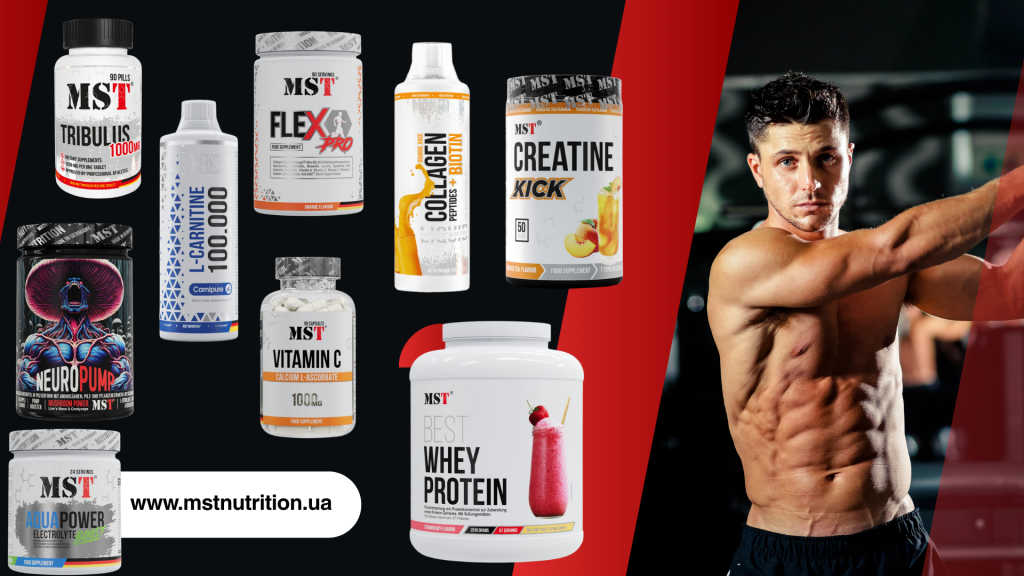
To start out, you do not need to gather ten different items. For gaining mass, protein (when needed) and creatine are often enough. For joint support, you can add a collagen complex, and for demanding workouts — a well-formulated pre-workout product or electrolytes. The MST® Nutrition range allows you to select formulas by goal, but the strongest stack is always the one you take consistently and understand exactly why you need it.
Introduce new products one at a time, follow the recommended serving size, and monitor your body’s response over a few weeks. When your goal is clearly defined, a supplement stops being a random purchase and becomes another precise tool for a stronger result.