 +38 050 933 51 60
 +38 093 369 29 10
A sharp start in a squat, a series of sprints, a heavy press, hard work in the octagon – ligaments receive a load that many people remember only after experiencing pain. That is why supplements for ligaments should be considered by athletes not as an accidental purchase, but as part of a recovery system where dosage, regularity, and relevance to your specific sport are crucial.
Who really needs supplements for ligaments for athletes
If you train 3-6 times a week, work with explosive movements, heavy weights, or high-impact loads, the risk of overloading your ligaments increases. This applies not only to powerlifters or bodybuilders. Runners, crossfitters, football players, MMA fighters, tennis players, and even those who are simply progressing aggressively in the gym often face discomfort in their knees, elbows, shoulders, and ankles.
But there is an important nuance. Supplements do not repair tears the way medical treatment does, nor do they eliminate the need for proper diagnosis. If there is swelling, joint instability, acute pain, or a feeling that the tissue “cannot hold,” a doctor should be your first step. Sports nutrition works best where support for connective tissue, management of chronic overload, and proper recovery between training sessions are needed.
What exactly helps ligaments
Ligaments consist primarily of collagen fibers, which means that the logic behind choosing supplements should revolve around collagen synthesis, the condition of connective tissue, and the management of inflammatory stress after exertion. Not every popular product with a joint support label is equally beneficial specifically for ligaments. A formula might be good for joint comfort but less precise for the goals of an athlete who wants to protect their ligamentous apparatus under truly harsh training conditions.
Collagen
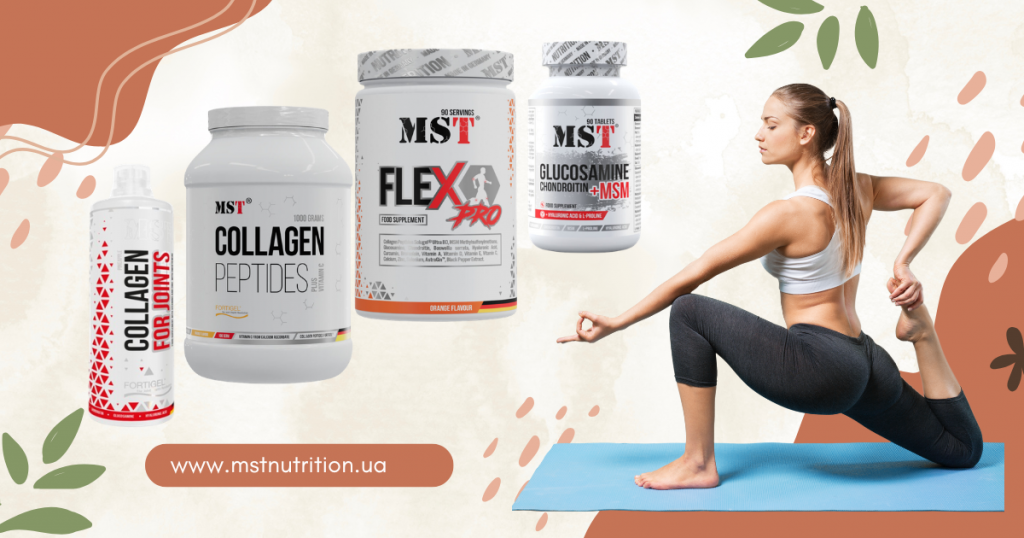
This is a baseline component for anyone looking for targeted ligament support. Most often, this refers to hydrolyzed collagen or collagen peptides. Their advantage is that they are convenient for daily use, blend well with other products, and are suitable both during high-load phases and the recovery period.
You should not expect an instant effect within 3-4 days. Ligaments recover more slowly than muscles, so only a long-term course strategy works. If a person takes collagen chaotically while training at their absolute limit, the result usually disappoints. In this segment, discipline is more important than loud promises.
Vitamin C
Without it, collagen synthesis does not work to its full potential. That is why combining collagen with vitamin C looks much more logical than taking a single ingredient in isolation. For an athlete, this is not a “bonus feature” but a practical necessity, especially if the diet is poor in fruits, berries, and vegetables, or if training stress is exceptionally high.
MSM and sulfur-containing compounds
MSM is frequently included in formulas for joints and ligaments due to its role in supporting connective tissue. It is not a magic ingredient, but as part of a well-thought-out complex, it can be highly appropriate. This is especially true when there is a feeling of stiffness after high-volume workouts or long cycles of heavy strength work.
Glucosamine and Chondroitin
These are more commonly associated with joints rather than ligaments, and rightfully so. However, in athletes, these structures function as a single system. If the joint apparatus is overloaded, the ligaments suffer as well. Therefore, in certain cases, complexes containing glucosamine and chondroitin make sense, particularly for older athletes, heavy lifters, and those who have been training with high volumes for years.
Omega-3
When it comes to recovery, one cannot reduce everything solely to collagen. Omega-3 helps to better regulate inflammatory responses, which is crucial after high-impact, strength, and repetitive loads. It is not a specialized supplement specifically for ligaments, but as background support for an athlete, it is often well justified.
Which supplements for ligaments for athletes to choose for different tasks
For prevention during an active training phase, collagen with vitamin C and high-quality basic dietary support are usually sufficient. This is an excellent option for those who do not want to wait for the first serious signal from their knees or shoulders but prefer to act proactively.
If there is already regular discomfort after exertion, it is worth looking at broader complexes: collagen, vitamin C, MSM, and sometimes glucosamine and chondroitin. Here, not only the composition is important, but also the duration of use. A one-off course “for two weeks before a competition” rarely delivers what the athlete expects.
During recovery after a break, returning to training, or ramping up working weights, a strategy where supplements are combined with a controlled progression of workloads functions much better. If you abruptly increase the volume of work, no complex – even a premium one – can compensate for program errors.
How to take it for real results
The most common mistake is taking supplements only on days when you feel pain. Ligaments need consistent building blocks and time. Therefore, a structured course over several weeks or months looks much wiser than chaotic use. This is particularly true in sports that involve a lot of jumping, sudden jerking movements, changes of direction, or high-impact work.
It makes sense to take collagen daily, not just before a workout. Some athletes respond well to taking it 30-60 minutes prior to exertion along with vitamin C, but overall regularity is still far more important than the specific hour. If you have sensitive digestion, it is better to test the product after meals and observe your individual tolerance.
The quality of raw materials matters as well. Cheap products often fall short not just in purification or taste, but in the practical ease of long-term use. If you skip a serving due to a pungent smell, inconvenient form, or doubtful brand trust, even a great composition will not work. That is why flawless quality and a transparent approach to formulas are not marketing noise, but a matter of results.
What supplements cannot fix
If your technique is flawed, warm-ups are ignored, and your recovery consists of coffee and four hours of sleep, the issue is not a lack of another jar. The ligamentous apparatus is highly sensitive to accumulated fatigue, calorie deficits, protein shortages, and sharp spikes in workload. Supplements enhance a smart system; they do not replace it.
Another factor is body weight. When an athlete rapidly gains mass or works during a cutting phase with a large deficit, tissues face extra stress. In the first scenario, it is due to mechanical load; in the second, due to poorer recovery. Therefore, ligament support must be integrated into the overall plan: nutrition, sleep, periodization, pain control, and timely de-loading.
How to read the ingredients without self-deception
A strong product for ligament support does not hide behind flashy words. Look for concrete ingredients, their dosages, and a clear formula logic. If a jar contains a dozen trendy components in micro-doses, it sounds beautiful but rarely works in practice.
An athlete should ask simple questions. Does the product contain a working amount of collagen? Is vitamin C added? Is the formula suitable for a daily course? Does it exactly match your specific load – strength, cyclical, or high-impact? Champions recommend solutions that withstand the test of training, recovery, and time, rather than random choices.
If you need a premium option with a focus on quality and predictable results, it is logical to choose brands that build their reputation on German manufacturing standards, pure raw materials, and understandable formulas. This approach is much closer to real sports, where organic ingredients, quality control, and trust in the product matter just as much as the numbers on the label.
When to start ligament support
Not after an injury, but well before it. If you already know that a strength cycle, preparation for a competition, an increase in running volume, or a return after a pause is ahead, that is exactly the right moment. Prevention in sports is always cheaper, easier, and smarter than backtracking in your training due to pain, movement limitations, and forced recovery.
For young athletes, this is a way to maintain the pace of progress longer without unnecessary pauses. For experienced ones, it is a chance to preserve the resource of tissues that have been working under load for years. And for those who combine sports with a demanding schedule, it is an additional element of control over recovery when every missed workout costs dearly.
In product lines like MST® Nutrition, a systemic approach is particularly valuable: not just “something for joints,” but a solution tailored to a specific goal – from collagen support to comprehensive recovery for individuals who train seriously and want to see results rather than a pretty package.
Strong ligaments do not provide an immediate “wow” effect in the mirror, but they are exactly what allows you to hold weight, speed, and stability when others are forced to take a break. If you train for results, supporting your ligamentous apparatus should be just as disciplined as your approach to every single repetition.