 +38 050 933 51 60
 +38 093 369 29 10
Skin doesn’t become dull, dry, or lose its firmness overnight. It is usually the result of a combination of factors: nutritional deficiencies, lack of protein, stress, intense workouts, inadequate sleep, UV exposure, and age-related changes. Supplements for healthy skin don’t replace skin care, sleep, or a balanced diet, but they can strengthen the foundation upon which its density, hydration, and even tone are built.
For athletes and individuals with an active lifestyle, this is especially relevant. Regular training increases the body’s demand for protein, micronutrients, and quality recovery. If resources are lacking, it can reflect not only on strength and endurance, but also on your hair, nails, and skin. A properly selected formula acts not as an instant cosmetic quick-fix, but as systemic support from within.
Healthy Skin Supplements: Key Components
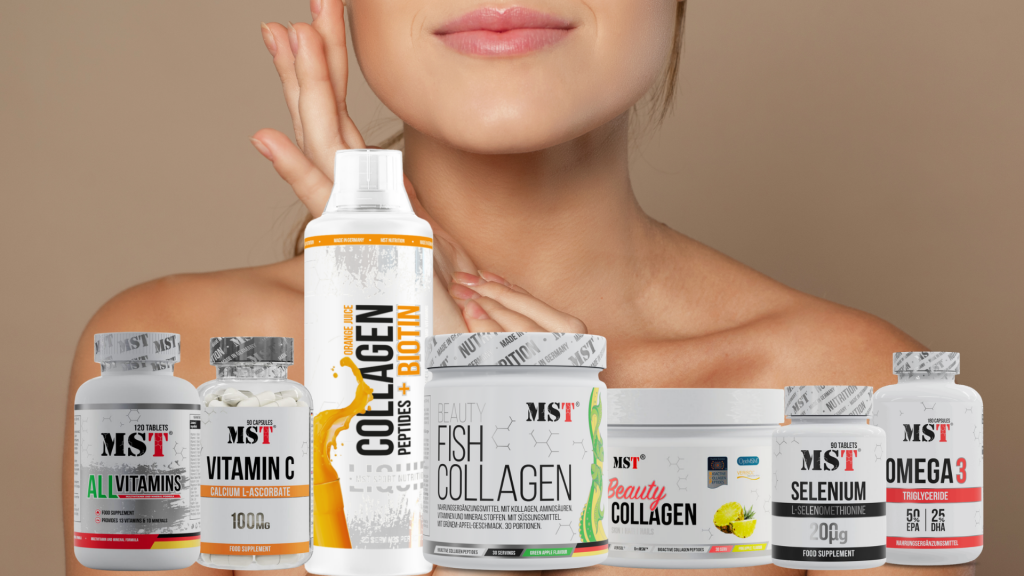
Collagen and Vitamin C
Collagen is the primary structural protein of the skin. It forms its structural framework, influencing elasticity and tissue density. With age, natural collagen synthesis gradually declines, while dietary protein shortages, restrictive diets, and heavy physical loads can make this process more noticeable.
When looking at supplements, opt for hydrolyzed collagen peptides. This form is broken down into shorter fragments, making it convenient for regular daily intake. Types I and III collagen are most frequently used, as they are primarily linked to skin, hair, nails, and connective tissues. A realistic timeline for evaluating results is 8–12 weeks of daily use, rather than just a few days.
Vitamin C is a crucial addition to this pairing. It participates in natural collagen synthesis while simultaneously functioning as a potent antioxidant. Taking collagen without sufficient vitamin C isn’t completely useless, but a comprehensive approach yields far better results. If your diet is low in vegetables, berries, leafy greens, and fruits, keeping this in mind is essential.
Omega-3 for Skin Comfort and Barrier Function
Feelings of tightness, flaking, and skin reactivity are often tied to the state of its lipid barrier. Omega-3 fatty acids (EPA and DHA) support normal inflammatory responses in the body and help cover the need for healthy fats, which are frequently lacking in strict athletic diets.
Omega-3s are not a topical cosmetic treatment and cannot single-handedly resolve acne, rosacea, or dermatological conditions. However, they serve as a strong foundational component for those who rarely eat fatty cold-water fish, follow restrictive diets, or wish to comprehensively support their heart, joints, recovery, and skin. Pay attention not just to total fish oil milligrams on the label, but to the actual amount of EPA and DHA per serving.
Zinc, Selenium, and B-Complex Vitamins
Zinc is involved in cellular regeneration, protein synthesis, and immune system function. When deficient, the skin may take longer to heal, and nails may lose their strength. At the same time, high doses of zinc without actual need is a poor strategy: prolonged excess can disrupt the balance of other trace minerals, particularly copper.
Selenium supports antioxidant defense but also requires precise dosing. When it comes to zinc and selenium, more is not better. Choose formulas with appropriate daily intake levels and avoid doubling up on multiple multivitamin complexes simultaneously.
B-complex vitamins are required for energy metabolism and proper function of numerous body systems. However, attempting to treat any skin issue with them without identifying the root cause may yield no results. For some individuals, an excess of specific B-vitamin forms may even be undesirable, so your supplement choice should match your actual needs rather than a social media trend.
Antioxidants: Support, Not Magic
Skin faces daily oxidative stress: sunlight, air pollution, sleep deprivation, intense training, and chronic stress have a cumulative effect. Vitamins C and E, selenium, Coenzyme Q10, and plant-based antioxidant compounds can complement your diet during periods of high physical stress.
However, antioxidants do not eliminate the need for daily SPF protection. Sunbathing regularly without sunscreen, smoking, sleeping five hours a night, and expecting a single capsule to undo those habits won’t produce results. Supplements deliver their best work where foundational lifestyle discipline is already established.
How to Choose a Formula Tailored to Your Goal
Start with a specific need rather than flashy packaging. If dryness and discomfort are your primary concerns, omega-3s, adequate hydration, sufficient dietary protein, and a refined skincare routine are ideal starting points. If your main goal is supporting skin elasticity and firmness, look to collagen peptides combined with vitamin C. If you experience brittle nails, slow skin recovery, or suspect nutrient deficiencies, evaluate your diet first and consult a physician for relevant lab work if needed.
Active individuals must not overlook total daily protein intake. No collagen supplement should serve as an excuse for chronically low consumption of complete protein sources. Meat, fish, eggs, dairy, or properly planned plant-based proteins supply the essential amino acids required by the entire body.
Evaluate ingredient labels honestly. A quality product clearly lists active ingredient dosages, nutrient forms, and recommended usage. Avoid overpaying for “proprietary blends” that hide exact ingredient amounts. Premium status comes down to quality control, predictable formulas, and raw material purity—not unrealistic promises of three-day transformations.
This principle forms the bedrock of the MST® Nutrition philosophy: targeted formulas should complement your workouts, recovery, and everyday health care without distracting from foundational habits.
Maximizing Results from Your Supplements
Consistency matters far more than searching for the “strongest” product on the market. Collagen, omega-3s, vitamins, and minerals work through accumulation and by gradually fulfilling cellular requirements. Skipping doses for days and then taking double portions is counterproductive. Follow the manufacturer’s directions and give your regimen sufficient time to work.
Track your progress objectively without self-deception. Take photos of your skin under identical lighting at day one and again after two to three months; monitor subjective tightness, overall comfort levels, and the condition of your nails and hair. If sleep, diet, skincare, and stress levels have changed simultaneously, avoid attributing all results to a single bottle—while still appreciating the role of quality nutritional support.
Caution is warranted for pregnant and breastfeeding women, individuals with chronic medical conditions, bleeding disorders, fish or seafood allergies, or those taking prescription medications. In these cases, consult a physician before starting new supplements. Severe breakouts, itching, hair loss, or sudden skin changes warrant professional medical evaluation rather than random product purchases.
Healthy, resilient skin thrives on consistency: adequate protein, healthy fats, hydration, sleep, sun protection, and transparently formulated supplements. Focus on one clear goal, support it daily, and give your body the time it needs to show results.