 +38 050 933 51 60
 +38 093 369 29 10
An increase in working weight, a few extra reps beyond your usual maximum, a better sprint pace, and faster recovery between sets—these are precisely why athletes value creatine. But when different forms appear on the label, a logical question arises: creatine monohydrate or hydrochloride—which will deliver better results for you specifically? The answer lies not in flashy marketing names, but in scientific evidence, personal tolerance, dosage, and consistent intake.
For muscle hypertrophy, strength sports, CrossFit, MMA, and high-intensity fitness, creatine remains one of the most thoroughly researched sports supplements available. While it doesn’t replace a structured training program, adequate protein intake, or quality sleep, it helps you train with greater power during short, explosive efforts.
How Creatine Works in Muscle Tissue
Muscles rely on ATP as a rapid energy source. During a heavy set, a sprint, a burst of exertion, or a striking combination, ATP reserves deplete within seconds. Creatine stored in muscle tissue participates in its rapid resynthesis, thereby supporting athletic performance during repeated, high-intensity bouts.
In practical terms, this translates to doing more quality work per training session. Performing one more controlled rep on squats, maintaining power output during final intervals, or recovering faster between rounds creates the necessary stimulus over time for strength gains and muscle growth. The effect is unlike a stimulant: it is cumulative and depends on fully saturating intramuscular creatine stores.
An important distinction: creatine does not burn fat directly. During cutting phases, it remains valuable because it preserves training intensity while in a caloric deficit. However, body fat reduction is primarily dictated by total diet, activity levels, and consistency.
Creatine Monohydrate vs. Hydrochloride: The Core Differences
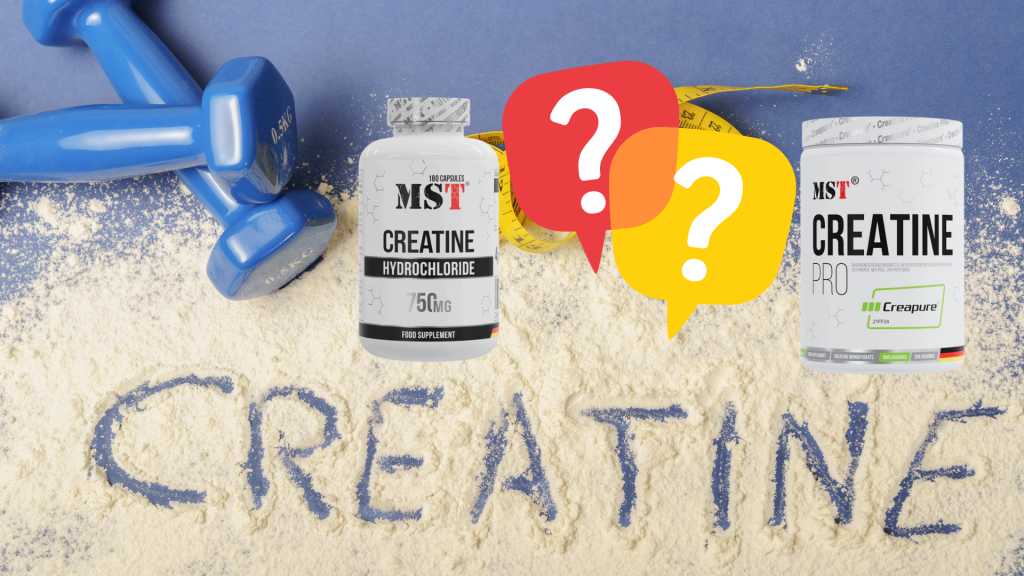
Creatine monohydrate consists of a creatine molecule bound to a water molecule. This specific form boasts the largest body of research supporting its efficacy in strength development, lean mass accretion, performance enhancement, and safety in healthy adults. It serves as the benchmark against which all other forms are measured.
Creatine hydrochloride (HCl) is creatine bound to hydrochloric acid. Its main characteristic is higher water solubility. Because of this, HCl is often marketed in smaller serving sizes and framed as a comfortable alternative for those who dislike powder residue at the bottom of a shaker or large liquid volumes.
However, superior solubility does not automatically translate to superior performance outcomes. There are currently fewer independent, high-quality studies proving that HCl outperforms monohydrate in driving strength gains or muscle mass. As long as both forms supply sufficient creatine and are taken consistently, the practical difference for most individuals is negligible.
Monohydrate: Proven Efficacy and Cost Efficiency
Monohydrate is the ideal choice if your priorities are predictable outcomes, a field-tested formula, and an optimal cost per serving. It consistently delivers standard effective doses without forcing you to pay extra for marketing claims.
Some individuals experience a slight weight increase during the initial phase of intake. This is primarily due to intracellular water retention inside muscle cells rather than subcutaneous fluid retention. For powerlifters or athletes in a bulking phase, this intracellular hydration is often a benefit: muscles appear fuller, and training performance improves. If you compete in weight-class sports, simply factor this weight shift into your schedule in advance.
High-quality monohydrate may leave a slight sediment in water—this is completely normal and not an indicator of poor quality. It can be mixed with water, juice, a protein shake, or added to food. Daily consistency matters far more than achieving a perfectly dissolved liquid texture.
Hydrochloride: When Personal Comfort Takes Priority
Hydrochloride may be appropriate if you experience stomach discomfort from larger powder volumes, frequently travel with supplements, or prefer maximum solubility. The smaller recommended scoop size is convenient for those who dislike large shakes.
However, avoid assuming HCl is inherently “stronger” simply because of a smaller serving size in grams. The body still requires a specific threshold of raw creatine to fully saturate muscle stores. Always check the ingredient label for actual active creatine yield per serving, and do not expect a micro-dose to automatically outperform the classic 3–5 g monohydrate dose.
If monohydrate causes mild GI discomfort, try splitting your daily dose, dissolving the powder thoroughly, or taking it alongside a meal first. If stomach distress persists, HCl serves as a viable, practical alternative—a matter of individual tolerance rather than a compromise on quality.
Effective Dosages and Protocols
For monohydrate, the core protocol is simple: 3–5 g daily. Timing is not critical. Some athletes prefer adding creatine to a post-workout shake, while others take it with their morning meal. Take it consistently on rest days as well, as the goal is maintaining tissue saturation.
A loading phase is optional. A traditional loading protocol involves taking approximately 20 g per day divided into 4 smaller servings for 5–7 days, followed by a 3–5 g daily maintenance dose. While this saturates muscle stores faster, it causes digestive upset in some users. Taking a steady 3–5 g dose daily achieves the exact same muscle saturation level gradually over 3–4 weeks.
For HCl, follow the manufacturer’s specific product instructions. Do not automatically apply monohydrate dosage rules to other forms, and avoid arbitrarily increasing serving sizes. Optimal supplement use relies on adherence to tested protocols.
Common Myths: Water Retention, Renal Health, and Fat Loss
Creatine does not cause dehydration as long as you maintain adequate daily fluid intake. Drinking sufficient water supports overall performance, thermoregulation, and recovery. Hydrate according to thirst, training intensity, ambient temperature, and urine color rather than force-drinking excessive volumes.
Extensive clinical research demonstrates that recommended creatine doses are safe for healthy adults. However, individuals with pre-existing renal disease, liver conditions, or those taking prescription medications should consult a physician prior to use. If undergoing routine blood work, notify your doctor that you supplement with creatine, as it can elevate serum creatinine levels—a marker commonly evaluated for kidney function.
Discontinuing creatine during a cutting phase is rarely necessary. Intracellular muscle hydration is distinct from subcutaneous fluid retention and will not obscure muscle definition. However, if prepping for a physique competition or a strict weight cut, test your supplement protocols weeks in advance rather than making changes days before an event.
Making the Right Choice Without Overpaying
If you want the most thoroughly tested, cost-effective, and reliable form for building strength, muscle mass, and power output, start with monohydrate. It remains the baseline choice for beginners and competitive athletes alike. Expect transparent labeling, controlled manufacturing, and formulas designed for real athletic performance from MST® Nutrition.
If your priority is a compact serving size, rapid solubility, or avoiding GI discomfort experienced with monohydrate, consider creatine hydrochloride. Choose a form not for revolutionary promises, but because it fits your daily routine seamlessly without missed doses.
The best form of creatine is the one you take consistently month after month. Select a high-quality product, stick to your daily dosage, apply progressive overload in your workouts, and let your training results speak for themselves.