 +38 050 933 51 60
 +38 093 369 29 10
Progressing working weights on the barbell happens not when you purchase a supplement container, but through structured resistance training, sufficient caloric intake, and systemic recovery. Supplements for strength training do not replace foundational training principles, yet they serve a precise purpose: enabling higher quality rep performance, fulfilling daily protein targets, accelerating recovery, and preserving joint health under heavy mechanical loads. Selecting the right stack means identifying a few evidence-based formulas tailored directly to your athletic goals.
Strength Training Supplements: What Delivers Real Results
Strength progression rests upon three pillars: progressive overload, adequate physiological energy, and post-workout recovery. If any of these elements is lacking, no supplement complex can compensate. For instance, creatine cannot override chronic sleep deprivation, nor can protein powder fix a diet that is perpetually deficient in total calories.
At the same time, sports nutrition offers clear practical utility. It provides precise ingredient dosing, convenience, and predictable dietary intake. Preparing a full whole-food meal after a grueling workday is not always feasible, whereas a serving of protein or creatine ensures key dietary targets are consistently met. For athletes training 3 to 6 times per week, this daily consistency determines whether measurable gains are achieved over several training cycles.
Creatine: The Primary Choice for Strength
Creatine monohydrate is among the most extensively researched supplements for athletes performing resistance training, explosive movements, or sprint work. It facilitates the resynthesis of adenosine triphosphate (ATP)—the primary energy pathway utilized during short-duration, high-intensity muscular efforts. In practice, this translates to completing an extra rep, maintaining peak power output across working sets, and steadily driving total training volume upward.
The standard daily protocol is straightforward: 3–5 g of creatine monohydrate daily. The precise time of intake is less critical than avoiding prolonged gaps in supplementation. A high-dose loading phase is optional: while it saturates muscle stores faster, standard daily dosing achieves the same intramuscular saturation within a few weeks.
A slight initial increase in total body mass may occur due to intracellular water retention within skeletal muscle tissue. This does not represent body fat accumulation and is generally a neutral or beneficial effect for strength athletes. Individuals with pre-existing renal conditions, pregnant or nursing women, or those under active medical care should consult a physician prior to starting supplementation.
Protein: When Daily Food Intake Falls Short
Muscle tissue does not grow solely from the act of lifting weights. Resistance exercise provides the adaptive stimulus, while dietary amino acids supply the structural building blocks for recovery and repair. For most active individuals engaged in regular strength training, the recommended daily target is roughly 1.6–2.2 g of protein per kilogram of body weight. The exact target varies based on lean body mass, training history, caloric balance, and overall diet.
Whey protein concentrate offers a practical method to meet protein requirements post-workout or between main meals. Whey protein isolate is frequently preferred by individuals seeking minimal lactose and carbohydrate content per serving. Casein protein serves as an ideal evening option due to its slow digestion rate. Plant-based protein blends accommodate dairy-free diets, provided they deliver a complete essential amino acid profile and adequate protein content per serving.
Drinking a shake within minutes of finishing your last set is not strictly required. The post-workout anabolic window is far broader than popular myths suggest. Maintaining consistent daily protein intake distributed across balanced meals throughout the week is far more critical.
Amino Acids, EAAs, and BCAAs: Who Needs Them?
Standalone amino acid supplements are not strictly necessary for every athlete. If your daily diet already contains sufficient high-quality protein, the functional need for standalone BCAAs is minimal. Whey protein, poultry, meat, eggs, fish, and complete plant sources naturally provide abundant branched-chain amino acids.
Essential Amino Acids (EAAs) can be beneficial during early-morning fasted workouts, periods of reduced appetite, strict caloric deficits, or long training sessions when solid food consumption is impractical. Formulations providing all nine essential amino acids are physiologically superior to BCAAs alone, as muscle protein synthesis requires the full spectrum of essential building blocks.
BCAAs can serve as a palatable intra-workout beverage to encourage proper hydration. However, they should not be expected to yield performance benefits comparable to creatine or meeting baseline protein requirements. Direct your supplement budget toward foundational products first.
Pre-Workout Complexes: Energy Without Chaos
A pre-workout complex offers functional value when you require mental focus, alertness, and sustained physical drive to complete planned workout volume. Caffeine is typically the primary active ingredient, improving alertness, cognitive focus, and peak power capacity during intense exercise. However, individual sensitivity varies significantly: a 150 mg dose may feel comfortable for one athlete, yet cause elevated heart rate and sleep disruption in another.
Citrulline malate is commonly included to support nitric oxide production and exercise endurance, while beta-alanine helps buffer intramuscular hydrogen ions during high-rep protocols. Note that the mild skin tingling (paresthesia) caused by beta-alanine is a harmless physiological response rather than an indicator of product potency. Avoid combining a pre-workout complex with multiple cups of coffee or energy drinks, abstain from taking stimulant-heavy formulas late in the evening, and avoid relying on stimulants to compensate for chronic sleep deprivation.
Individuals with blood pressure fluctuations, cardiovascular conditions, anxiety disorders, or specific medical contraindications should exercise heightened caution with stimulant-based products. Athletic strength relies on controlled loading, not overriding fatigue signals.
Joint and Ligament Support Under Heavy Loads
Heavy squats, deadlifts, presses, and pull-ups provide a powerful stimulus for muscle hypertrophy, while simultaneously subjecting joints, ligaments, and tendons to significant mechanical stress. Collagen peptides, vitamin C, omega-3 fatty acids, and specialized joint formulations form a crucial part of a long-term preventive strategy. This is especially relevant for experienced lifting athletes, runners, combat sports competitors, and those returning to training after a hiatus.
Collagen supplementation does not negate the necessity of proper lifting mechanics, thorough warm-ups, and structured load management. If you experience acute joint pain, swelling, or restricted mobility, seek medical evaluation rather than masking symptoms with supplements. Proactive joint care works best when implemented before discomfort becomes chronic.
Structuring Your Functional Supplement Stack
For muscle hypertrophy, the baseline stack typically centers on creatine and protein powder to cover dietary shortfalls. For heavy strength phases, this same foundational pairing remains optimal, while a pre-workout complex can be introduced selectively while monitoring total caffeine intake. During a cutting phase, the primary focus shifts to preserving dietary protein intake, taking creatine, maintaining a structured caloric deficit, and prioritizing recovery over unproven fat-loss formulas.
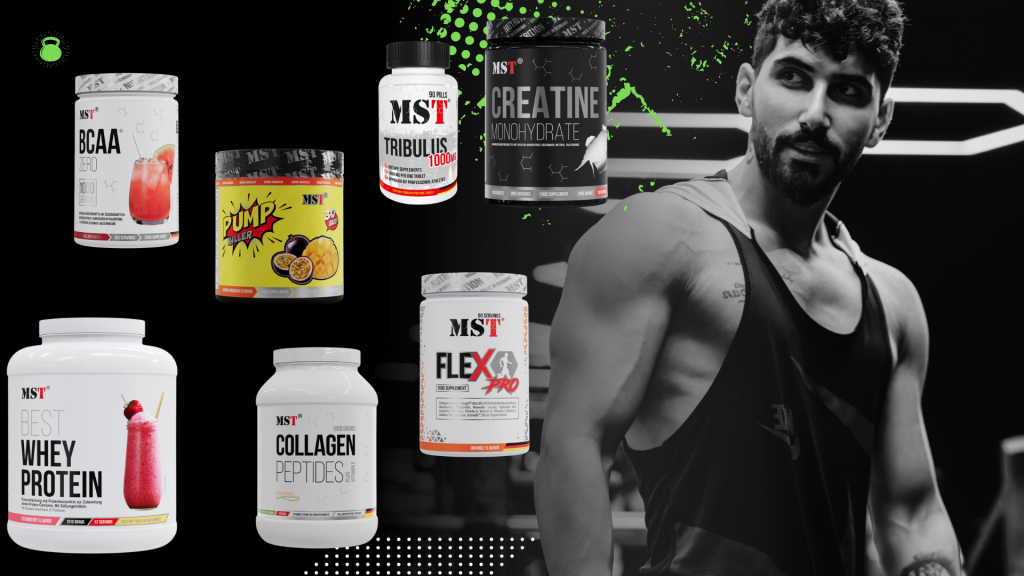
Always verify label transparency, active ingredient dosages per serving, expiration dates, and manufacturing standards. True quality is defined by clear formulations and functional efficacy, not front-label marketing claims. The MST® Nutrition product line allows you to select targeted products aligned with your exact training goal: strength output, muscle mass, endurance, recovery, or joint support.
Avoid introducing multiple new supplements simultaneously. Begin with a single product, monitor your digestion and training performance for 3 to 4 weeks, and log your workouts. When working weights progress consistently, sleep quality remains uncompromised, and recovery stays stable, you have selected a functional tool built for athletic progress.