 +38 050 933 51 60
 +38 093 369 29 10
Gaining muscle without a noticeable increase in fat is not about a random choice of jars in a sports store. Supplements for gaining lean mass work when they enhance an already built system: sufficient calorie intake, progressive strength training, high-quality sleep, and stable protein in the diet. Their task is to address specific needs of the body, rather than replace work with the barbell and the plate.
For an athlete who wants to look denser, stronger, and more defined, the main question is not “which supplement is the most powerful?”, but “what is missing in my routine?”. Someone lacks protein during the day, someone falls short on calories due to an active schedule, and another needs support for strength in heavy basic exercises. A smart choice depends precisely on this.
What gaining lean mass means in practice
“Lean mass” does not mean that you can simultaneously build muscle and completely exclude fat. A small increase in fat tissue is possible even with a highly disciplined approach. A realistic goal is to create a moderate calorie surplus, provide the body with building blocks, and train so that excess energy goes primarily toward recovery and muscle growth.
For most athletes, the starting strategy is to add approximately 150-300 kcal per day to their maintenance calories. If weight is rising too fast and the waistline is visibly increasing, the surplus is too large. If strength indicators are stalled, weight is not changing, and recovery is weak, perhaps the body is not receiving enough energy, protein, or sleep.
Supplements do not determine the outcome on their own, but they make the routine more precise. Quality protein simplifies hitting your protein targets, creatine helps perform more productive work, and amino acids can support workouts when a full meal is unavailable.
Baseline supplements for lean mass gain
Protein: a convenient way to hit your protein norm
Muscles do not grow from the mere fact of drinking a shake, but from a sufficient amount of complete protein in the diet. For an individual training regularly with weights, a practical benchmark is frequently 1.6-2.2 g of protein per kilogram of body weight per day. The exact figure depends on weight, training volume, calorie deficit or surplus, and food tolerance.
Whey protein is particularly convenient after a workout, at work, or on the road. It digests quickly, has a complete amino acid profile, and allows you to avoid skipping a protein meal. An isolate can be an excellent choice for those who control carbohydrates and fats or have a sensitivity to lactose. Casein is appropriate in the evening, when a slower supply of amino acids is required.
At the same time, protein should not displace regular food. Meat, fish, eggs, dairy products, legumes, and grains provide not only protein, but also micronutrients, fats, and dietary fiber. A shake is a precise tool, not the foundation of the diet.
Creatine: strength, volume of work, progress
Creatine monohydrate is one of the most studied sports supplements for strength disciplines. It supports rapid energy restoration during short, intense efforts: heavy sets, sprints, and explosive movements. The practical result is the ability to maintain working weights more steadily, perform an extra repetition, or preserve the quality of the final sets.
Typically, creatine is taken at 3-5 g daily, without a specific timing requirement. Consistency is what matters. A loading phase is not mandatory: it only saturates muscle stores faster, but does not make the supplement more effective in the long run.
At the start, body weight may increase slightly due to water retention inside muscle cells. This is not fat gain, nor is it a reason to abandon creatine. Evaluate progress not just by the number on the scale, but also by strength, measurements, photos, and how your clothes fit.
Gainer: only when food is objectively insufficient
A gainer is not useful for everyone. It is a concentrated source of calories, protein, and carbohydrates that can help ectomorphs, athletes with high energy expenditure, or those who physically do not have time to eat a sufficient volume of food.
However, it is precisely with a gainer that it is easiest to overshoot your calories. If you are prone to quickly gaining fat, start with half a serving, monitor your waistline, and track overall calorie intake. Often, a more effective solution is regular protein combined with oatmeal, a banana, peanut butter, or other foods where you completely control the composition.
EAA, BCAA, and amino acids: when they are appropriate
Essential amino acids (EAAs) can be useful during long workouts, morning sessions before breakfast, or in situations where a large gap occurs between meals. They do not replace a full serving of protein, but they can support the supply of amino acids to the muscles at an inconvenient moment.
BCAAs make sense far less frequently if you already have enough whey protein, meat, fish, or eggs in your diet. In this case, a complete protein product or EAAs typically provide a broader amino acid profile. This is an example of a smart approach: not buying a supplement just because it is popular, but evaluating its role specifically within your scheme.
Recovery determines how much muscle you preserve and build
Growth occurs between workouts. If you add weight to the barbell but are constantly sleep-deprived, train through joint pain, and do not give your muscles time to recover, expensive supplements will not compensate for this problem.
Omega-3, magnesium, vitamin D in the presence of a confirmed deficiency, and joint complexes can be appropriate elements of a recovery system. They are not direct stimulants of muscle growth, yet they help maintain health, mobility, and the ability to train consistently. For athletes working with heavy weights, this is sometimes more important than another serving of stimulants.
Pre-workout complexes can increase concentration and motivation during a heavy session, but you should not use them as a way to mask fatigue. Monitor your overall caffeine consumption, do not take stimulants late in the evening, and do not sacrifice sleep for the sake of one powerful workout.
How to assemble a working scheme without unnecessary expenses
Start with the basics: a food diary for 7-10 days will show how much protein and calories you actually receive. Next, add protein if you do not cover your daily norm with food, and creatine monohydrate to support strength progress. Select a gainer, EAAs, a pre-workout complex, and additional formulas only for a specific task, rather than “just in case.”
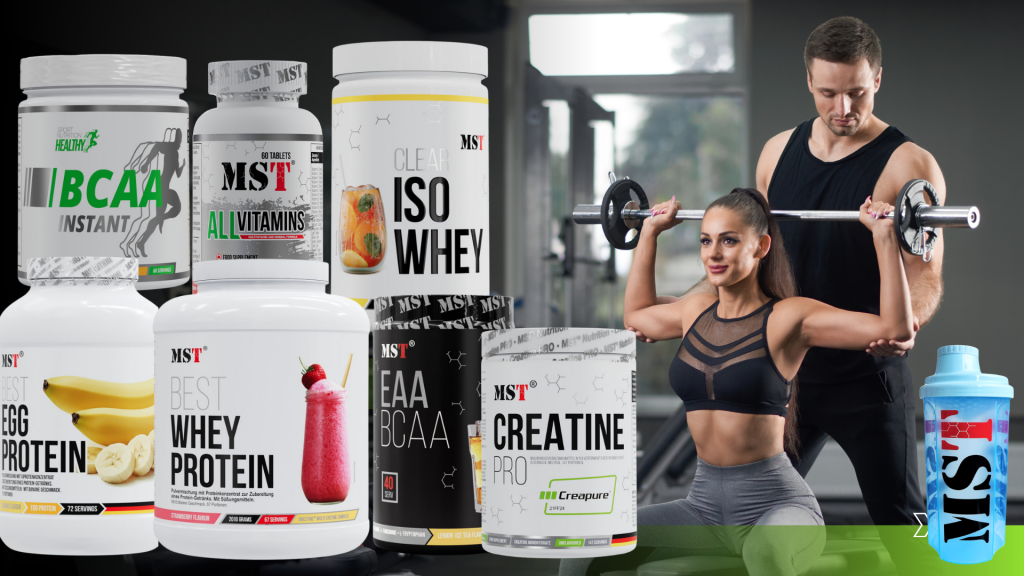
When choosing sports nutrition, look for a transparent composition, clear dosages, and manufacturing quality. MST® Nutrition products are created for those who value flawless quality, formula control, and results that can be tracked in a training log, rather than just in advertising promises.
Do not change everything at once. Add one supplement, give yourself 3-4 weeks to evaluate well-being, recovery, working weights, and the dynamics of measurements. This way you will understand what genuinely works for you specifically.
Lean mass is built by repeating correct actions: eating on time, performing planned sets, adding workload, recovering, and doing it again. Supplements should occupy their proper place in this discipline – precise, justified, and result-driven.