 +38 050 933 51 60
 +38 093 369 29 10
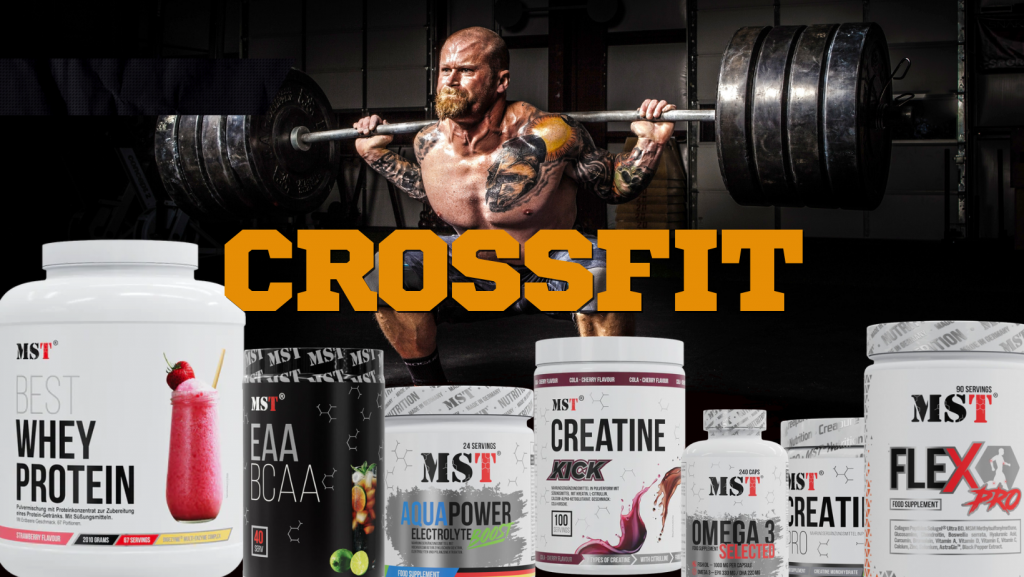
When training combines a heavy barbell, gymnastics, intervals on the verge of max heart rate, and a finish on pure grit, random decisions don’t work. That is why crossfit supplements should be chosen not by fashion, but by the task: strength, endurance, recovery, protection of joints, and stable performance from session to session.
Crossfit does not forgive chaos. If nutrition fails, sleep fluctuates, and supplements are chosen at random, an athlete very quickly hits a plateau. At the same time, the right stack does not replace discipline, but it is able to give a tangible advantage – more quality repetitions, better work in intense intervals, less soreness the next day.
What supplements for crossfit make sense
There is no single magic tub in crossfit. There are several categories that can really work if they match your workload format. For most athletes, the base consists of creatine, protein, amino acids or EAAs in specific scenarios, pre-workout complexes, electrolytes, omega-3, and products for joint support.
Why exactly these? Because crossfit strains several systems at once. You need explosive strength for lifts, a buffer for repeated intense efforts, enough protein for muscle recovery, and support for connective tissue, which receives no less load in such training than the muscles.
Creatine – the base for strength and repeated power
If we talk about the number one supplement, it is creatine monohydrate. Its power is not in loud promises, but in a predictable result. For a crossfitter, this can mean better performance in heavy sets, more powerful bursts in short intense intervals, and more quality where the work goes in series.
Creatine is especially appropriate for those who combine metcons with a barbell, Olympic lifts, front squats, pulls, jerks, and who want not just to “survive” a workout, but to progress in strength indicators. At the same time, you shouldn’t expect an instant effect after a single dose. It is a strategic supplement that reveals itself with regular use.
There is a nuance: some athletes are afraid of water retention. In practice, this most often refers to intramuscular hydration, rather than being “bloated” in an everyday sense. If you are preparing for a competition in a specific weight category, the scheme should be adjusted individually.
Protein – not for “mass”, but for recovery
In crossfit, protein is still often underestimated because people rely only on pre-workout complexes. This is a mistake. If the body does not get enough amino acids, recovery sags, and with it, the result.
Whey protein is convenient when there is no opportunity to quickly close the need for protein with regular food. After a morning workout, between work and the gym, in a high-volume workload phase, this is not a “bodybuilder option”, but a practical tool. It helps not to miss the protein norm and keep muscle recovery on level.
If you are already consistently getting enough protein from your diet, protein will not provide magic on top. But for most active people, it is convenience and regularity that make it truly useful.
Pre-workout complexes – when focus and pace are needed
There are days when the body is ready, but the head is not. There is also another situation: there is energy, but there is a lack of concentration and neuromuscular sharpness. Here, pre-workout formulas can be justified.
A good pre-workout complex for crossfit works not only for the feeling of a stimulus. Its task is to support concentration, motivation, readiness for intense work, and, in some cases, endurance in the format of repeated loads. But this is exactly a tool, not a daily crutch for an exhausted regime.
The trade-off here is simple: strong stimulants can give a great start, but at the same time increase heart rate, worsen technique control, or hit sleep if the workout is in the evening. For crossfit, this is critical, because excitement without control is a direct path to technical errors under the barbell. That is why the composition and dosage matter no less than the brand on the label.
EAAs, BCAAs and amino acids – when they are justified
There is a lot of noise around amino acids, but for an experienced athlete, context is important, not a beautiful promise. If you consume enough protein throughout the day, BCAAs will not always give a distinct difference. But EAAs can be appropriate during periods of high training volume, on a cut, during morning workouts on an empty stomach, or when large gaps are formed between meals.
For crossfit, this is also relevant due to the mixed nature of the load. When there is heavy strength work, long WODs, and technical sessions in one week, amino acid support sometimes helps to reduce the subjective feeling of exhaustion. But putting it above protein or creatine is not worth it.
Electrolytes and hydration – an underestimated advantage
Many athletes are ready to discuss expensive complexes, but go out to a workout already with light dehydration. For crossfit, this means a faster drop in pace, worse recovery between rounds, and an unpleasant feeling as if you were “turned off” in the middle of work.
Electrolytes make special sense in the heat, during long sessions, with heavy sweating, and during intense preparation. They do not make you stronger by themselves, but they help maintain productivity where even a slight loss of fluid tangibly hits the result.
This is one of those categories where the effect is often not dramatic, but very practical. Less cramps, better workload tolerance, more stable work pace.
Omega-3 and joint support
Crossfit is not just about muscles. It’s shoulders, elbows, knees, wrists, achilles, lower back. If you train seriously, taking care of joints and ligaments should be a part of the system, not a reaction to pain.
Omega-3 is often included in the basic set due to supporting overall recovery and controlling inflammatory processes. It will not remove the consequences of poor technique, but it can be a useful part of the strategy for an athlete working at high volumes.
Separately, it is worth looking toward joint formulas and collagen products if you have a heavy load on ligaments, jumping work, a heavy barbell, or accumulated fatigue in connective tissue. What matters here is not quick “anesthesia”, but systemic support. It is in this approach that premium solutions with quality raw materials have an advantage.
How to assemble a stack without extra expenses
The best supplements for crossfit are not those that create the biggest check, but those that close your weak spots. If you are a beginner or returning after a pause, it is logical to start with the base: creatine, protein if necessary, omega-3, and electrolytes. This is often enough to feel the difference without overloading the body and budget.
If you already have a good regime and stable training 4-6 times a week, then it is appropriate to add a pre-workout complex for heavy or morning sessions, as well as joint support under high impact or strength loads. EAAs or other amino acids make sense as a targeted solution, rather than a mandatory standard for everyone.
A professional approach always starts with the question: what exactly is holding back my progress right now? If there is a lack of strength – we look at creatine and protein. If endurance “crumbles” – we check hydration, electrolytes, sleep schedule, and the adequacy of pre-workout support. If the body does not have time to recover – we analyze protein, omega-3, collagen, workload, and training frequency.
What to look for when choosing
For a crossfitter, composition is more important than marketing. Transparent dosage, clear formula, quality control, manufacturer’s reputation, and predictability of the effect – these are the criteria that distinguish a serious product from a beautiful tub.
This is especially true for pre-workout complexes and multi-component formulas. If the label promises everything at once – strength, fat burning, pump, recovery, focus, and “extreme energy” – this is a reason to be cautious. In sports, result is given by accuracy, not noise.
That is why many athletes in Ukraine choose brands with European production standards, clear specialization, and a strong reputation in the sports environment. MST® Nutrition Ukraine closes this need due to quality formulas, clear categorization by goals, and products created for those who train seriously. Champions recommend not slogans, but a result that can be repeated.
What you can safely skip
Everything that does not solve a specific task. If you sleep for 5 hours, eat somehow, and do not get enough protein, an expensive “advanced” stack will not save progress. If you have a sensitivity to stimulants, an aggressive pre-workout product can hinder more than help. If workouts are moderate, part of the specialized supplements simply will not pay off in terms of a tangible effect.
A strong athlete differs not by the number of tubs on the shelf, but by the ability to cut off the excess. Flawless quality matters, but appropriateness matters even more.
Crossfit loves the prepared. If your supplements support strength, recovery, and stable work under load, they become part of the result, not just a purchase. Choose what works exactly for your training format, and let each WOD confirm it in practice.