 +38 050 933 51 60
 +38 093 369 29 10
Buying sports nutrition does not simply mean adding a tub of protein to your cart. For some, it is a tool for muscle growth; for others, it means faster recovery, weight control, joint support, or filling basic nutritional gaps. The mistake begins when a person grabs a popular product instead of what actually aligns with their workload, diet, and goals.
The market is vast, and the promises are even greater. However, the result always comes down to three things: formula quality, accuracy of choice, and consistency of intake. That is why sports nutrition should be approached with the same discipline as a training plan.
How to Buy Sports Nutrition for Your Specific Goal
If the goal is gaining muscle mass, the priority is usually not “magic” complexes, but the basics. Protein helps meet the daily protein requirement, creatine supports strength and explosive power, and amino acids can be useful during periods of high workload or when the diet is far from perfect. If nutrition is already properly structured, supplements work as an enhancement. If the diet is chaotic, they will not compensate for systemic errors.
For fat loss, the logic is different. Here, sports nutrition does not replace a calorie deficit, but it can help preserve muscle, control appetite, and maintain workout quality. Protein is often more beneficial than aggressive fat burners because it provides satiety and supports body composition. Thermogenic formulas do not make sense for everyone—especially if there is sensitivity to stimulants, sleep issues, or high blood pressure.
For endurance and functional sports, the focus shifts to recovery, electrolyte balance, amino acid support, and pre-session energy formulas. Pre-workout complexes can provide a strong boost, but here, a famous brand name matters less than the ingredients. Effective dosages of active substances mean more than a flashy label.
If your goal is not the stage or a deadlift record, but healthy tone, skin, hair, and nail quality, joint comfort, and a stable well-being, then collagen, omega-3, vitamins, minerals, and ligament support take center stage. This is also sports nutrition in a broad sense—not just about the gym, but about the body’s resources.
What to Check Before Buying Sports Nutrition
First—the origin of the product and the manufacturer’s reputation. If a brand controls the formulas, raw materials, and manufacturing standards, that is a whole different level of trust. Flawless quality is never accidental; it is ensured by technology, testing, and batch-to-batch composition stability.
Second—label transparency. If a formula contains many loud names but unclear dosages or hidden proprietary blends without specifics, that is a weak signal. A truly strong product needs no smoke and mirrors. You must see exactly what you are getting, in what quantity, and for what purpose.
Third—the formula’s alignment with your workload. A beginner does not always need a complex five-item stack. In many cases, protein, creatine, and basic health support are enough. An experienced athlete, on the other hand, often chooses more targeted solutions: EAAs during a cutting phase, a pre-workout complex for heavy strength days, or joint support against a background of high training volume.
Fourth—tolerance. The exact same product can work well for different people but feel different. Some prefer a classic whey concentrate, while others find an isolate more comfortable. Some respond calmly to caffeine, while others get tachycardia and ruined sleep instead of focus. Here, power lies not in maximalism, but in precision.
Which Categories Work Most Effectively
Protein remains the most practical category. Its main advantage is that it solves a real problem—the lack of protein in the daily diet. If a person trains, recovers slowly, or wants to preserve muscle during a calorie deficit, a good protein product brings tangible benefits.
Creatine is one of the most proven sports supplements. It does not promise miracles in three days, but it consistently supports strength indicators, performance in repeated intense efforts, and progress in core cycles. That is why it is often chosen by bodybuilders, CrossFit athletes, and martial artists alike.
BCAAs and EAAs make sense not as a mandatory purchase for everyone, but as a tool in specific scenarios. For instance, during a cut, with twice-daily workouts, or during periods when it is difficult to get a complete amino acid profile from food. If the diet is already rich in protein, the effect may be less noticeable.
Pre-workout complexes are good when you need to increase focus, explosive power, and readiness to work at your maximum. But this is exactly where people most often buy an emotion instead of a result. Champions recommend not the loudest tubs, but those formulas with a clear logic of composition and honest dosing.
Collagen, omega-3, vitamins, and joint complexes are often underestimated by people who think only in terms of “bulk or cut.” This is a mistake. A strong body is not just about muscle volume, but also about the quality of recovery, ligament condition, mobility, skin, hair, and overall resource. Organic ingredients and clean formulas are especially important here, as these products are often taken in cycles.
Cheap or High-Quality: Where the Overpayment Really Is
The desire to save money is understandable, but in sports nutrition, a low price sometimes means a compromise where it is not immediately visible. This could mean lower-grade raw materials, poorer bioavailability, an overload of sweeteners, or simply a marketing-driven tub with mediocre content.
A premium product does not always mean paying extra for the brand. Often, it is a payment for quality control, formula stability, European manufacturing, cleaner ingredient sources, and real compliance with the stated composition. When you buy a supplement for a month-long cycle or longer, what matters is not just the price per package, but the price per effective serving.
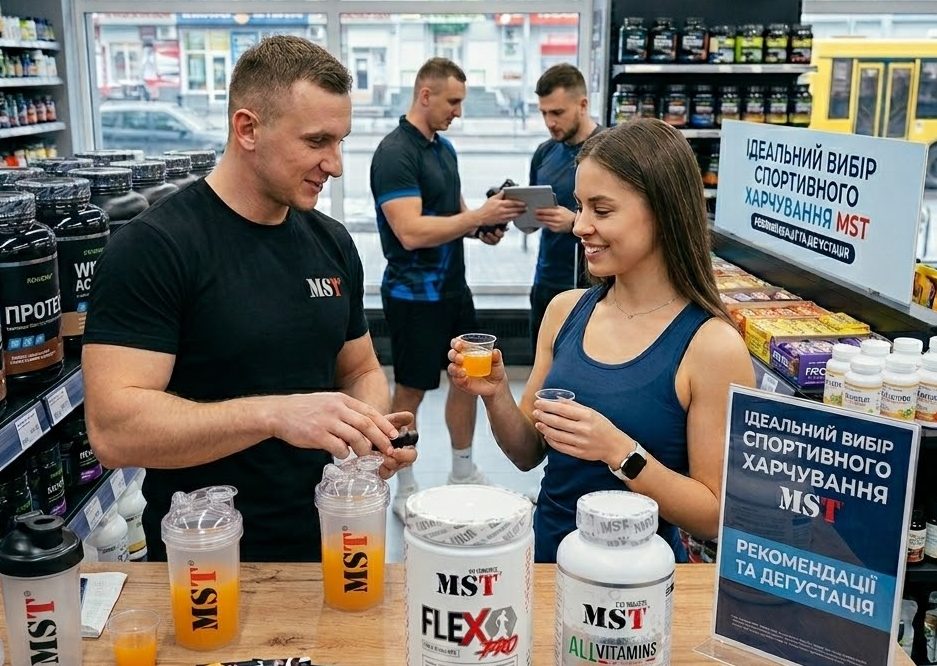
This is where the advantage lies with brands that build their reputation on results rather than accidental hype. For example, MST® Nutrition Ukraine works with a clear logic of segmentation by goals, which simplifies the choice and reduces the risk of buying the wrong product. For the buyer, this is not a small detail, but a saving of time, money, and expectations.
Typical Buyer Mistakes
The most common mistake is buying too much at once. A person sees a sale, orders protein, a fat burner, a pre-workout, amino acids, a testosterone booster, and vitamins, but does not understand what they actually need. As a result, some of the tubs sit unused, and the outcome gets blurred.
The second mistake is relying solely on reviews. What worked for a professional bodybuilder on a bulk will not necessarily be optimal for someone who trains three times a week and wants to lean out a bit for the summer. Context is everything.
The third is expecting an instant effect. Even the highest quality supplement will not compensate for poor sleep, lack of protein, missed workouts, and an inconsistent routine. Sports nutrition works best where a foundation is already in place.
How to Build Your Stack Without the Chaos
If you are just starting out, it is enough to ask yourself three questions: what is my main goal, what is missing in my diet, and what is hindering my progress right now. If you are falling short on protein—get protein. If you lack strength performance—look toward creatine. If a high workload hurts your recovery—consider amino acids, omega-3, collagen, or joint support.
If you are already an experienced user, the point is not a larger quantity of products, but better periodization. One stack can work during the off-season, another during a cut, and a third during a peak strength phase. A strong approach is always based on the task, not on random purchases.
When you decide to buy sports nutrition, think like an athlete: not “what is trendy right now,” but “what will give me a concrete result.” This is exactly the approach that separates an impulse buy from systemic progress. And systemic progress is always noticeable—in the mirror, in the numbers, and in the feeling of your own strength.