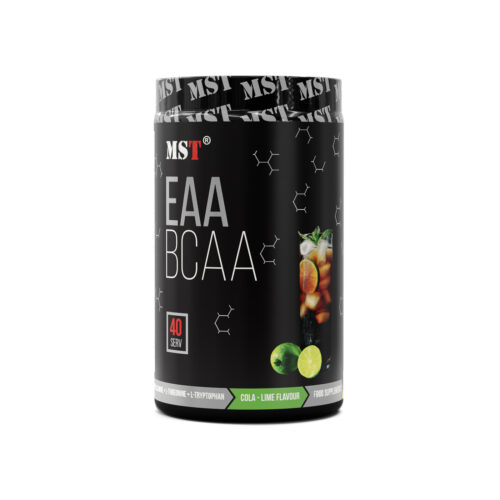
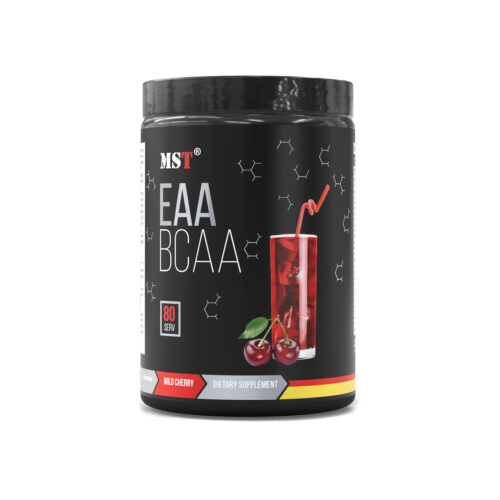
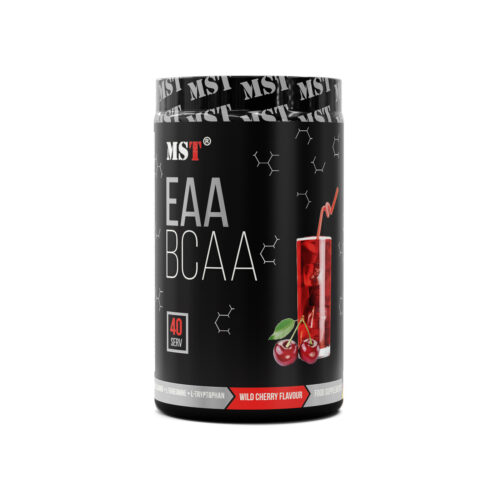
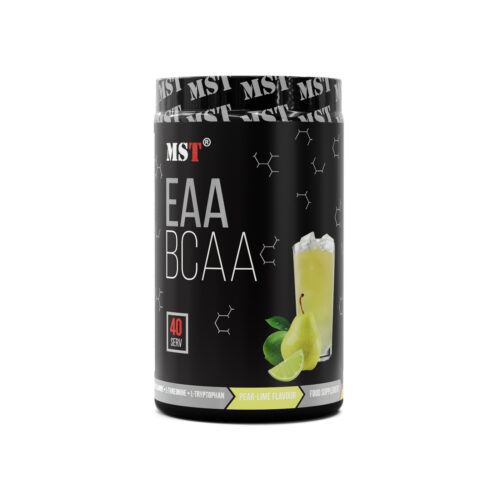
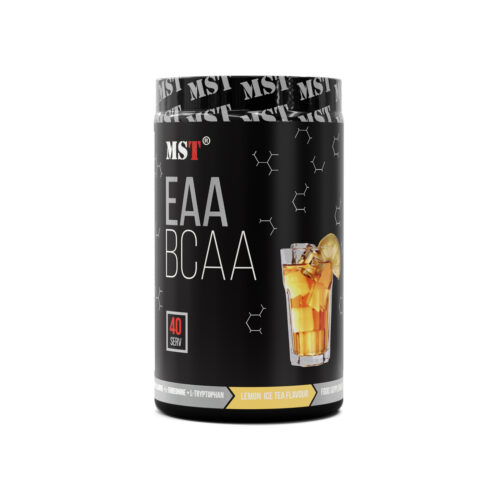
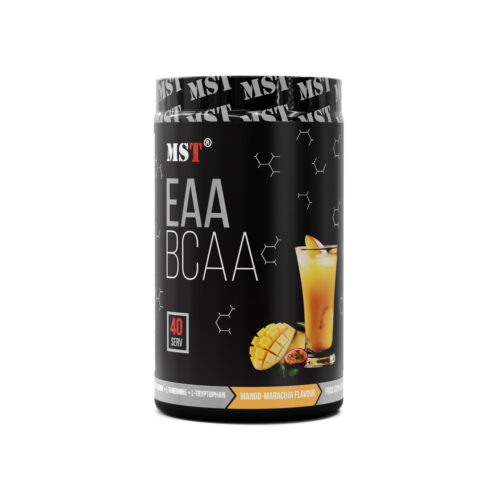
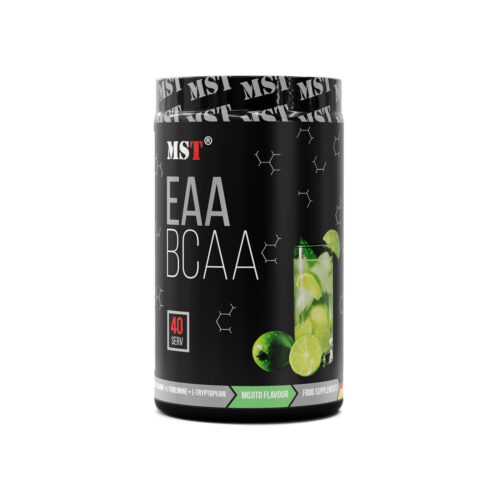
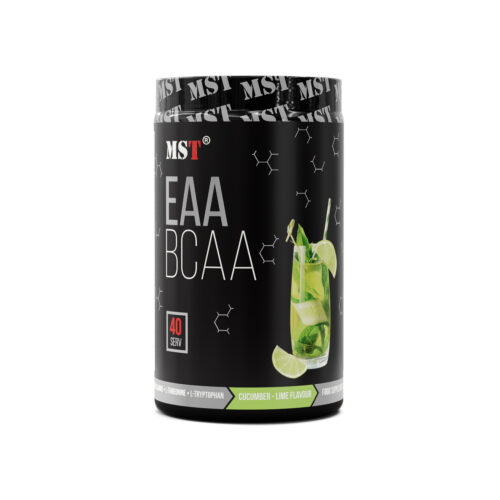
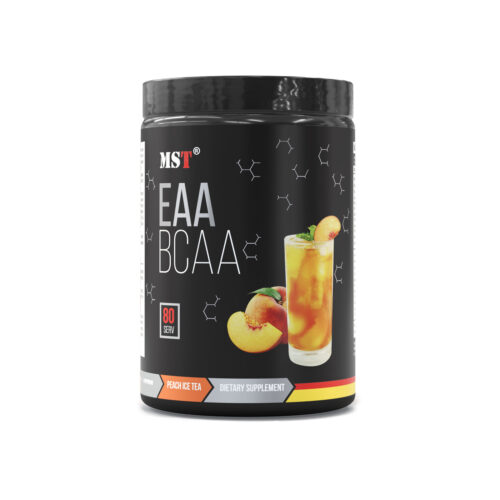
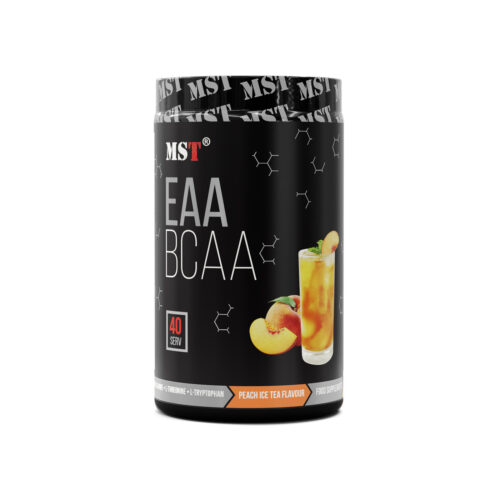
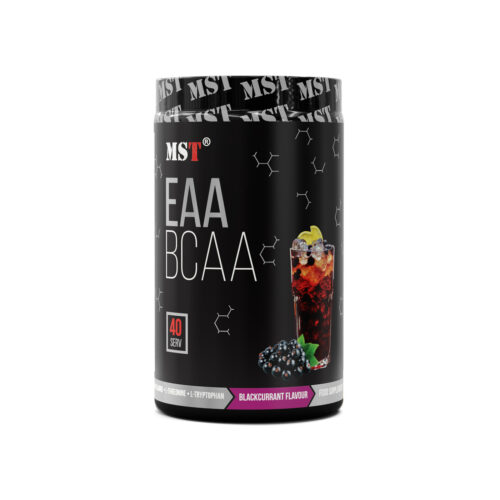
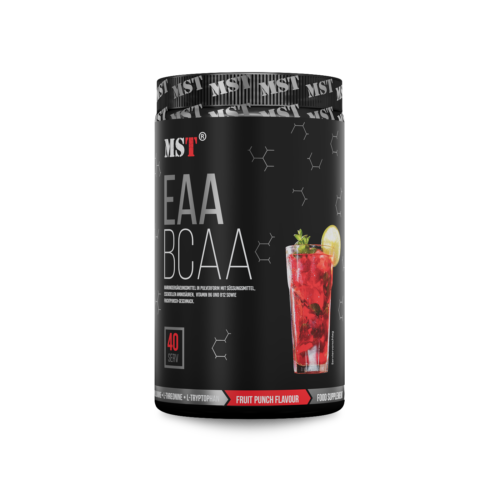
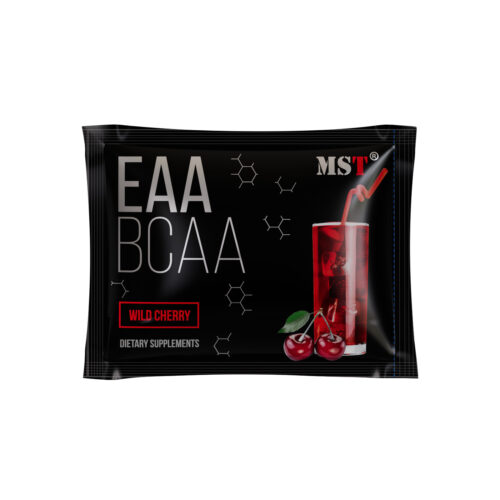
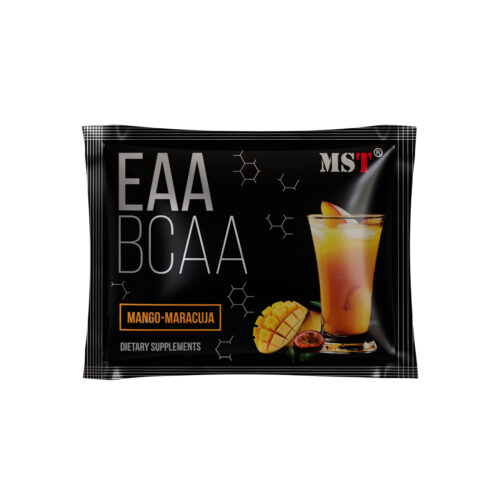
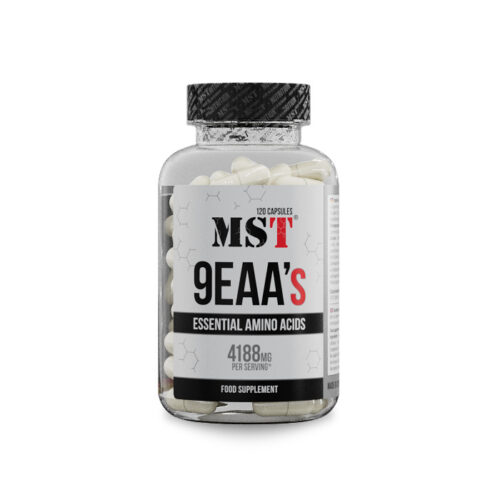
EAA (Essential Amino Acids) are essential amino acids that the body cannot synthesize on its own, but which are critically important for muscle recovery, muscle mass protection, protein synthesis, and overall endurance. They are especially needed by athletes, active people, and anyone who wants to improve recovery after workouts, reduce fatigue, and maintain tone.
Essential amino acids ЕАА are not just a sports supplement, but a key to preserving muscles, supporting energy, and complete recovery. Unlike isolated BCAA, ЕАА contains the full range of necessary amino acids, allowing the body to effectively build muscle tissue, even under stress — during intense training, calorie restriction, or insufficient protein in the diet. They are ideal for athletes, people on diets, vegetarians, and those who want to preserve lean muscle mass and ensure complete recovery after physical exertion.
If you are looking for where to buy ЕАА in Ukraine — MST® offers the best price without compromising quality. A wide selection of flavors in powdered versions of MST® BCAA&EAA Zero, capsule forms of MST® 9EAA’s Capsule, trial samples — all available on the official website mstnutrition.ua. You get certified German quality, transparent composition, fast delivery across Ukraine, and competitive prices. Don’t miss your chance to order ЕАА at a great price right now — your muscles will thank you!
This study compared the effectiveness of taking the full range of ЕАА versus isolated BCAA. It was proven that the complete set of essential amino acids causes a significantly higher level of muscle protein synthesis. This is because the body needs all 9 amino acids to form new structures, not just leucine, isoleucine, and valine. ЕАА trigger anabolic processes faster and more efficiently. It was also found that taking ЕАА before a workout has a greater effect than after. This laid the foundation for recommendations to use EAA as a pre-workout.
🔗 Tipton KD et al. (2001). Am J Physiol Endocrinol Metab, 281(2):E197–E206.
Robert Wolfe, one of the leading experts in protein metabolism, proved that only EAA can fully activate the protein synthesis process. He emphasizes that BCAA may be useful, but they alone do not trigger protein synthesis without the presence of other amino acids. That is, without a full EAA profile, the body cannot create new muscle proteins. In addition, even in a calorie deficit, ЕАА can maintain muscle mass. This makes them ideal during weight loss or “cutting” phases. Wolfe recommends EAA as the foundation of sports nutrition for anyone who wants to preserve muscle.
🔗 Wolfe RR. (2017). J Int Soc Sports Nutr, 14:20.
Researchers analyzed the effect of EAA intake on athletes who were on a hypocaloric diet. Results showed that adding EAA to the diet helps preserve muscle mass even under energy deficit. This is especially relevant for bodybuilders and athletes during “cutting” phases. Without EAA, the body may break down muscles as a source of amino acids. Participants who took EAA had significantly lower levels of catabolism. Thus, EAA is not only anabolic but also a anti-catabolic.
🔗 Churchward-Venne TA et al. (2012). Am J Physiol Endocrinol Metab, 303(5):E603–E613.
This experiment studied how EAA affect muscle damage levels after intense physical exertion. It was recorded that participants who took EAA before or immediately after a workout had significantly lower levels of creatine kinase (a muscle stress indicator). This means faster recovery and less inflammation. They also experienced less muscle soreness (DOMS) the next day. Taking EAA reduced inflammation markers and sped up regeneration. The results are especially useful for athletes who train daily.
🔗 Pasiakos SM et al. (2014). Nutrients, 6(6):2137–2162.
This study showed that the anabolic response to EAA does not last long after one intake. However, if EAA is consumed several times a day in small doses, the effect is maintained continuously. This is especially useful for those aiming to gain or maintain muscle mass during a calorie deficit. Participants with frequent EAA intake had a stable positive nitrogen balance. This means proteins in the body are actively synthesized and not broken down. Recommendation: 3–4 times a day, 5–10 g of EAA.
🔗 Areta JL et al. (2013). J Physiol, 591(Pt 9):2319–2331.
This is one of the first studies to show that even without training load, EAA can stimulate muscle protein synthesis. Participants took 6 g of EAA at rest — and within 30 minutes, protein synthesis was activated. This effect was comparable to that of a full protein intake. Thus, even on rest or rehabilitation days, EAA can support muscle tone. This is especially useful for older people who do not exercise regularly. Conclusion: EAA are an effective form of protein nutrition without excess calories.
🔗 Borsheim E et al. (2002). Am J Physiol Endocrinol Metab, 283(1):E76–E83.
Choose the format that suits you best:
In the official MST® online store you get:


 +38 050 933 51 60
 +38 093 369 29 10