 +38 050 933 51 60
 +38 093 369 29 10
MST® MYO-INOSITOL: Support for Metabolism, Insulin Sensitivity, and Female Reproductive Cycle
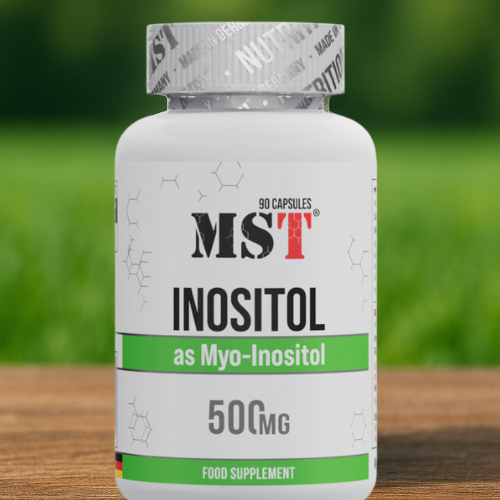
MST® MYO-INOSITOL 90 capsules is a high-quality vegan dietary supplement containing Myo-Inositol at a dosage of 500 mg per capsule (1500 mg in a daily serving). Myo-Inositol, belonging to the B-vitamin group (B8), is a key component for cellular signaling and glucose metabolism. It is widely used to support insulin sensitivity and correct hormonal balance in women. The product is manufactured in Germany (MADE IN GERMANY). You can buy MST Myo-Inositol at the best price in Ukraine to normalize metabolism and reproductive function.
A Deep Dive into Myo-Inositol
Myo-Inositol is a natural component of the body that plays a crucial role in cell communication. It is a precursor to secondary messengers that control the cell’s response to insulin and other hormones [2, 3].
- Role in Insulin Sensitivity: Myo-Inositol is critically important for the function of insulin receptors [2]. It helps cells “open up” to glucose, thereby reducing insulin resistance and promoting the normalization of blood glucose levels [2, 5].
- Impact on Metabolic Syndrome: Normalizing insulin sensitivity contributes to improving the lipid profile and overall metabolism [5].
- Reproductive Function: Myo-Inositol is a key element in supporting egg quality and menstrual cycle regularity [4], especially in women with Polycystic Ovary Syndrome (PCOS) [1].
Historical and Dietary Context
Myo-Inositol, although categorized as a B-group vitamin (sometimes labeled as B8), is actually a pseudovitamin, as it can be synthesized by the body itself and is also found in many foods. It was first identified in 1850, but active research into its metabolic role only began in the second half of the 20th century. Dietarily, it is most common in cereals (especially bran), nuts, some fruits (citrus, melons), and legumes. However, in plants, it often exists as phytic acid (inositol hexaphosphate), which can reduce the bioavailability of certain minerals due to its binding properties. This is why taking Myo-Inositol in the form of a purified supplement, such as MST® Myo-Inositol, is a more effective way to provide the body with the necessary clinical dose. This aspect is particularly important because modern diets often lack sufficient fresh, unprocessed foods, and stress and certain medical conditions can increase the body’s need for this substance. Thus, Myo-Inositol acts not just as a nutrient, but as an important signaling molecule, the deficiency of which can disrupt complex intracellular processes related to hormones and energy metabolism.
Mechanism of Action and Impact on the Metabolic Link
One of the most important discoveries regarding Myo-Inositol is its direct link to insulin signal transduction. When insulin binds to the receptor on the cell surface, it activates the release of other mediators known as inositolphosphoglycans (IPGs) [2]. Myo-Inositol is a key building block for these molecules. In individuals with insulin resistance or PCOS, there is a disruption in Myo-Inositol metabolism, leading to a deficiency of necessary IPGs. This deficiency, in turn, causes so-called “post-receptor” resistance of cells to insulin, forcing the pancreas to produce it in excess. Supplementation with exogenous Myo-Inositol (as with MST® Myo-Inositol) helps restore the pool of these signaling molecules, thereby potentiating the effect of insulin without increasing its secretion [2]. This leads to better glucose level control, reduced burden on the pancreas, and decreased risk of complications associated with metabolic syndrome. Furthermore, improved insulin sensitivity positively correlates with a reduction in inflammatory markers.
Difference Between Myo-Inositol and D-Chiro-Inositol
It is also important to understand the difference between Myo-Inositol (MI) and D-Chiro-Inositol (DCI), as both are stereoisomers of inositol but have slightly different functions in the body. Normally, the MI to DCI ratio in pancreatic cells is about 100:1, and this ratio is critical for proper insulin signal transduction [5]. MI is primarily responsible for glucose uptake by cells, while DCI is involved in glucose metabolism and storage. Studies have shown that using pure Myo-Inositol or an MI:DCI combination in a physiological ratio (e.g., 40:1) is the most effective for treating insulin resistance and PCOS. MST® Myo-Inositol provides pure Myo-Inositol, which is the main form needed to restore cellular signaling. Thus, the supplement supports the body’s natural mechanisms for optimizing energy metabolism [5]. This gives users the opportunity to accurately dose the specific form of inositol that is most needed to improve receptor sensitivity. This is a fundamental approach to supporting metabolic flexibility, which can worsen over time due to diet, age, or hormonal changes.
Advantage of the Vegan Formula and 1500 mg Dosage
MST® Myo-Inositol provides a clinically relevant dose in a convenient vegan capsule form.
- Dosage: The daily serving (3 capsules) contains 1500 mg of Myo-Inositol [photo складу], which corresponds to doses effectively used in most clinical studies to support metabolic and hormonal balance [1, 4].
- Product Purity: The vegan formula ensures high purity and is suitable for individuals with various dietary restrictions [photo складу].
- PCOS Support: Regular intake of Myo-Inositol can help promote restoration of ovulatory function and reduction of androgen levels in women with PCOS [1, 4].
Comprehensive Support for Hormonal Balance
Myo-Inositol is not a hormone, but it acts as a universal messenger, improving the cell’s response to many hormones. This makes it valuable for:
- Hormonal Balance: Contributes to the harmonization of hormonal fluctuations [1].
- Nervous System: As a vitamin-like substance, it participates in nerve impulse transmission, promoting psycho-emotional balance [3].
Detailed Review of Ingredients and Dosage (per 3 capsules – daily serving)
The MST® Myo-Inositol formula ensures a high concentration of the key component.
| Інгредієнт (Zutaten) | 1 Капсула (1 Capsule) | 3 Капсули (3 Capsules) | Функція |
| Міо-Інозитол (Myo-Inositol) | 500 mg | 1500 mg | Support for insulin sensitivity [2] |
Main Ingredient: Myo-Inositol.
Other Components: Hydroxypropyl Methylcellulose (HPMC) (capsule shell).
Recommendations for Taking MST® MYO-INOSITOL
To achieve maximum effectiveness in supporting metabolism, it is important to adhere to the recommended intake regimen.
Recommended Dosage:
- Take 3 capsules daily.
Intake Schedule:
- Capsules should be taken daily, with plenty of water. The daily dose can be divided into several administrations.
Important Warnings:
- Do not exceed the recommended daily dose.
- The product is a dietary supplement and cannot replace a complete, balanced diet.
- Consultation with a doctor: Individuals with diabetes or metabolic disorders should consult a doctor before use.
- Storage: Store in a dry, cool place, out of reach of small children.
Where to Buy MST® MYO-INOSITOL: Availability
Buy in Ukraine:
The original MST® MYO-INOSITOL 90 capsules is available at official points of sale, as well as in leading online stores for sports nutrition and specialized stores throughout Ukraine. Contact official distributors to buy Myo-Inositol for metabolic support:
- Ukrainian Official Website: MST® MYO-INOSITOL 90 capsules
Buy in the EU (European Union):
The product MST® MYO-INOSITOL is available through the MST Nutrition distribution network in Europe. You can purchase it by visiting the official German manufacturer’s website:
- German Official Website: Myo-Inositol 90 Kapseln
📚 Research Sources
[1] Genazzani, A. D., et al. (2008). Myo-inositol administration positively affects hormonal and metabolic parameters in women with PCOS.
[2] Nestler, J. E., et al. (1998). Role of inositolphosphoglycans in insulin action.
[3] Bevilacqua, A., et al. (2015). Inositols: From Biochemistry to Clinical Practice.
[4] Pizzo, T., et al. (2014). Effects of myo-inositol on ovarian function and metabolic factors.
[5] Dinicola, S., et al. (2017). Myo-inositol and D-chiro-inositol in the management of metabolic disorders.