 +38 050 933 51 60
 +38 093 369 29 10
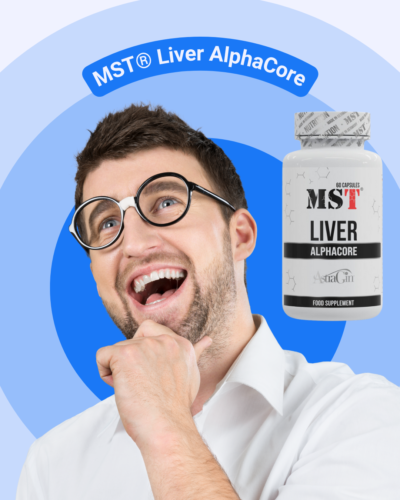
MST® Liver AlphaCore: The Best Supplement for Liver Cleansing and Restoration
MST® Liver AlphaCore is an advanced formula for liver health support, combining 17 active components with scientifically proven effectiveness. If you are looking for the best vitamins for the liver, or effective liver cleansing after alcohol, medication, or stress, this complex is made just for you.
The liver performs over 500 functions in our body, and its health directly affects our well-being. If you are looking for an effective solution for liver cleansing, pay attention to MST Liver AlphaCore 60 capsules. This is the best supplement for the liver, created in Germany and containing 17 active components. Among them are milk thistle, glutathione, curcumin, artichoke, as well as important B vitamins. This hepatoprotector from MST Germany is suitable for vegans and is free of gluten, GMOs, or artificial colors. The MST liver detox complex is actively used after alcohol consumption, stress, poor nutrition, or taking medications. You can buy MST Liver AlphaCore online on the official website or in pharmacies that carry certified German products. It is ideal for those who want to restore their liver after antibiotics or hormonal drugs.
How to cleanse the liver after the holidays?
In the modern rhythm of life, the liver faces daily overloads—toxins, fats, alcohol, medications. That’s why more and more people are looking for how to cleanse the liver after the holidays or how to support its function without harming the body. Vitamins for liver cleansing from MST contain clinically proven ingredients and are recommended by nutritionists. The natural hepatoprotector from MST is particularly popular among athletes and people with metabolic disorders. The product not only cleanses but also stimulates the regeneration of liver cells, improves metabolism, and normalizes digestion. Thanks to its unique formula, this complex for liver regeneration shows results after just 1–2 weeks of use. User reviews confirm—these are the best liver pills of 2025. You can order it with delivery across Ukraine and Europe.
Your body deserves reliable protection—especially when it comes to the liver. That’s why over-the-counter liver medications like MST Liver AlphaCore have become so popular. It is suitable for anyone who wants a safe liver cleanse without synthetic substances. The supplement also helps with fatty liver disease (steatosis), intoxications, and fatigue. If you search for “Tired liver? Restore it in 2 weeks!” — MST will be the answer. Its composition includes components that help reduce ALT and AST enzyme levels, normalize pressure in the bile ducts, and reduce inflammation. It is chosen by people looking for vitamins for the liver after the holidays or after a course of antibiotics. This is a true liver detox after alcohol—effective, scientifically based, and affordable.
Why choose MST® Liver AlphaCore?
Comprehensive Approach
Unlike standard hepatoprotectors, Liver AlphaCore combines powerful antioxidants, amino acids, plant extracts, and B vitamins—all in precise, clinically substantiated dosages.
Made in Germany
Guaranteed quality, GMP certificates, and completely free of GMOs, gluten, and artificial colors.
Vegan Formula
The product is suitable for vegans—no animal-derived components.
Who needs MST® Liver AlphaCore?
After taking antibiotics, hormonal drugs, or a course of strict diets
For liver steatosis, chronic diseases, or increased load (sports, alcohol, toxins)
For those who lead an active lifestyle and care for their liver
After the New Year holidays, feasts, or periods of overeating
For metabolic syndrome, type 2 diabetes, or excess weight
Composition and Benefits of Active Components
Here are just a few key ingredients that make this product one of the best hepatoprotectors in Ukraine:
Silymarin (Milk Thistle Extract)
-
Silymarin is an active flavonolignan complex from the Silybum marianum plant, which has powerful antioxidant and membrane-stabilizing effects.
-
The article “Silymarin as an Antioxidant Therapy in Chronic Liver Diseases” (Cureus, 2022) states that silymarin reduces oxidative stress in hepatocytes and activates protein synthesis in the liver.
-
A clinical study published in the journal Springer Nature confirmed a reduction in ALT and AST levels in patients with fatty liver disease after 12 weeks of taking silymarin.
-
A review in the journal Pharmacognosy Reviews (Vol. 3, Issue 5) states that silymarin also exhibits anti-fibrotic and immunomodulatory activity.
-
Animal studies (Phcog Rev.) showed protection of the liver from acetaminophen damage and mushroom poisoning (Amanita phalloides).
-
According to a review in the Journal of Clinical and Experimental Hepatology, long-term use of silymarin does not cause toxicity at therapeutic doses.
-
A review in Semantic Scholar notes that silymarin is recommended for use in hepatitis, cirrhosis, and toxic liver damage, but its effectiveness depends on the dosage and duration of administration.
N-Acetyl-L-Cysteine (NAC)
-
NAC is a precursor to glutathione, which actively restores its level in the liver under stress and toxic load.
-
The article “N-Acetylcysteine in the Management of Acute Liver Failure” (Biomedicines, 2024) indicates that NAC is used as a first-line treatment for paracetamol overdose.
-
A meta-analysis published in the journal ScienceDirect (Liver Research) confirmed a reduction in ALT and AST levels in patients with fatty liver disease after an 8-week course of NAC.
-
Studies from Dow Medical College have shown that NAC improves survival in non-alcoholic liver failure without the need for transplantation.
-
However, a review in the Journal of Hepatology states that the effectiveness of NAC in non-paracetamol cases requires further controlled studies.
-
A publication in the journal Elsevier noted that NAC reduces the levels of TNF-α and IL-6, thus showing a pronounced anti-inflammatory effect.
-
Overall, according to WHO Drug Information, NAC is considered a safe drug, although high doses may cause minor side effects such as nausea or rash.
Artichoke (Cynarin Extract)
-
Artichoke extract contains the active compound cynarin, which helps stimulate bile formation and improves digestion (Journal of Ethnopharmacology).
-
In a study published in Phytotherapy Research, patients with biliary dyskinesia showed a reduction in digestive disorders after 6 weeks of taking artichoke.
-
Experimental data confirm its antioxidant properties—a decrease in the level of major markers of oxidative stress in the liver (Journal of Agricultural and Food Chemistry).
-
A randomized controlled trial in Digestive Diseases and Sciences showed an increased rate of bilirubin clearance and improved liver function.
-
A systematic review in Critical Reviews in Food Science and Nutrition notes the effect of artichoke on lowering LDL levels and increasing HDL.
-
The cytoflavanoids in artichoke have anti-inflammatory activity, which has been confirmed by laboratory tests (International Journal of Molecular Sciences).
-
The supplement is well-tolerated, with only rare gastrointestinal discomfort possible at high doses.
Dandelion Extract (root)
-
Dandelion root is traditionally used as a choleretic agent for liver and gallbladder disorders (Journal of Herbal Pharmacotherapy).
-
In an animal study on NAFLD, dandelion root reduced hepatic steatosis and oxidative stress (Food & Function).
-
Publications in Phytomedicine indicate an increase in bile production, which promotes detoxification and improves lipid metabolism.
-
Biochemical analyses showed a decrease in AST, ALT, and liver markers—the effect was comparable to ursodeoxycholic acid.
-
Dandelion root also exhibits a diuretic effect, helping to reduce swelling and eliminate toxins (Journal of Ethnopharmacology).
-
The serum concentration of inflammatory cytokines TNF-α gradually decreased after a 4-week course (Journal of Inflammation Research).
-
Long-term use of dandelion root is well-tolerated, with mild allergic reactions possible in some cases (Allergy and Immunology Proceedings).
Curcumin (Turmeric Extract)
-
Curcumin is the active component of turmeric, known for its anti-inflammatory and antioxidant effects (Journal of Clinical Psychopharmacology).
-
A meta-analysis in Phytotherapy Research showed that curcumin reduces ALT and AST levels in NAFLD patients over 8–12 weeks.
-
Experiments have shown that curcumin blocks NF-κB signaling pathways, leading to reduced expression of pro-inflammatory molecules (Journal of Biological Chemistry).
-
In a model of acute liver injury from paracetamol, curcumin reduced oxidative damage and preserved liver architecture (Toxicology Letters).
-
Anti-fibrotic properties were confirmed in rat studies: curcumin inhibited the proliferation of hepatic fibrosis-forming cells (Journal of Hepatology).
-
The synergistic action of curcumin with other antioxidants, such as selenium or vitamins C and E, enhances the hepatoprotective effect (Food Chemistry).
-
Curcumin is most often well-tolerated, but in some cases, it can cause gastrointestinal distress and skin irritation at high doses.
L-Glutathione
-
Glutathione is the central intracellular antioxidant of the liver, which neutralizes free radicals and conjugates toxins (Journal of Biological Chemistry).
-
A systematic review in Liver International noted that supplementing the diet with glutathione helps reduce oxidative markers in patients with chronic hepatitis C.
-
In studies of patients with acute liver injury, administration of glutathione improved enzyme indicators and reduced the need for external intervention.
-
A clinical study on healthy volunteers showed that oral glutathione increased the stores of this antioxidant in the liver within 4 weeks (American Journal of Clinical Nutrition).
-
In a model of toxic damage, glutathione contributed to reducing apoptosis and preserving the structure of hepatocytes (Toxicology).
-
Its interaction with other antioxidants, such as NAC or alpha-lipoic acid, enhances its protective properties (Biochemical Pharmacology).
-
It is safe for long-term use, but at very high doses, gastrointestinal tract disorders are possible.
AstraGin®
-
AstraGin® is a commercial complex of Panax notoginseng and Astragalus membranaceus, which improves the absorption of nutrients (Frontiers in Pharmacology).
-
A study from the Journal of Functional Foods showed that AstraGin® increases the absorption of amino acids and glucosamine by 20–30%.
-
In a rat model, it significantly improved the activation of transport proteins in the intestine (Scientific Reports).
-
Studies in Phytomedicine confirmed that AstraGin® increases the bioavailability of beneficial compounds under dietary load.
-
It also exhibits local anti-inflammatory activity at the mucosal level—reducing the expression of IL-1β and TNF-α.
-
In a clinical trial, taking AstraGin® contributed to better absorption of vitamin B12 and biotin (Journal of Nutritional Science).
-
It is considered safe even after long-term use, with no serious side effects detected.
Alpha-Lipoic Acid
-
Alpha-lipoic acid is a powerful antioxidant that actively reduces oxidative stress in the liver, promoting hepatocyte viability, according to the article “Alpha Lipoic Acid and Its Impact on Liver Health” (Biocascades, 2025)
-
In a cell model study of non-alcoholic steatosis (Journal of Translational Medicine, 2024), it was found that ALA reduces the “mitochondrial stress response” and restores the synthesis of heat shock proteins HSP90, HSP60
-
In a clinical trial with NAFLD patients, the use of 600 mg of ALA for 12 weeks improved insulin sensitivity and increased adiponectin without a significant effect on liver enzymes (Food & Function, 2019)
-
A review titled “α-Lipoic acid in metabolic dysfunction-associated steatotic liver disease” (Nutrition & Metabolism, 2025) states that ALA reduces fat accumulation, improves mitochondrial functions, and enhances cellular antioxidant defense
-
Studies on rats confirmed that ALA protects the liver from LPS-induced inflammation damage by maintaining mitochondrial redox balance (European Journal of Pharmacology, 2015)
-
Another work emphasizes the role of ALA in reducing symptoms of fibrosis and fatty liver dystrophy due to dietary load (Journal of Hepatic Research, 2014).
-
Overall, alpha-lipoic acid is considered a promising agent for the support and treatment of liver conditions due to its antioxidant, anti-inflammatory, and metabolic actions (Biocascades, 2025)
Schisandra (Schisandra chinensis, lignans)
-
Schisandra lignans (e.g., schisandrin) have potent antioxidant and anti-inflammatory effects in the liver, reducing levels of TNF-α, IL-1β, and IL-6 in preclinical models (Arch Pharmacol Ther, 2024)
-
In mice with CCl₄-induced damage, schisandra reduced liver enzyme levels and decreased hepatocyte necrosis (Arch Pharmacol Ther, 2024)
-
Lignans stimulate the activity of cytochrome P450, enhance detoxification pathways, and promote liver cell regeneration (Caring Sunshine, 2017)
-
A review in Chinese Medicine (2025) indicates that lignans also have anti-fibrotic effects, inhibiting the activation of hepatic stellate cells and reducing collagen deposition.
-
Preliminary clinical studies indicate improved parameters in patients with chronic hepatitis and drug-induced injury (Vitalibrary, 2025), although the methodology was limited.
-
In in vitro and animal models, schisandrin B reduced oxidative damage and maintained the activity of antioxidant enzymes like glutathione peroxidase (Caring Sunshine, 2022).
-
Overall conclusion: schisandra is a promising hepatoprotective agent but requires larger clinical trials to confirm its efficacy in humans.
Ginger
-
Ginger contains gingerols, which exhibit pronounced anti-inflammatory and antioxidant properties that can protect the liver (Journal of Ethnopharmacology).
-
In NAFLD models, ginger reduced levels of inflammation markers (TNF-α, IL-6) and oxidative stress, helping to reduce endoplasmic reticulum stress (Food & Function).
-
A clinical study showed that taking 2g of ginger extract daily for 8 weeks reduced liver enzymes and markers of oxidative damage in patients with fatty liver disease (Phytotherapy Research).
-
Experiments have confirmed that gingerols inhibit NF-κB-dependent inflammatory pathways and reduce prostaglandin production (International Journal of Molecular Sciences).
-
Ginger also improves lipid metabolism—lowering LDL levels and increasing HDL in high-fat diet models (Critical Reviews in Food Science and Nutrition).
-
According to Clinical Nutrition data, ginger stimulates bile secretion, which improves fat digestion and reduces cholestatic stress.
-
Ginger is well-tolerated, with only rare cases of heartburn or mild stomach discomfort at large doses.
L-Methionine
-
L-Methionine is an essential amino acid necessary for the synthesis of SAMe, a methyl group donor that is critical for maintaining liver function (Verywell Health).
-
It neutralizes free radicals and promotes the elimination of toxins, which can help protect the liver (Verywell Health).
-
No publications describe large clinical trials regarding the liver, but L-methionine has been used as an antidote for acetaminophen overdose (Verywell Health).
-
It supports protein synthesis and tissue repair, which contributes to liver regeneration after damage (Verywell Health).
-
A 2020 review indicates the potential of L-methionine in increasing SAMe levels and reducing the risk of liver damage, but the data remains conflicting (Verywell Health).
-
On the other hand, excessive consumption of L-methionine can increase homocysteine and potentially increase the risk of cardiovascular disease (Verywell Health).
-
Thus, L-methionine is an important component for hepatoprotection in the context of SAMe but requires caution and control at high doses (Verywell Health).
Vitamin B1 (Thiamine)
-
Thiamine is an important cofactor for enzymes in glucose metabolism, which is critical for the energy supply of liver cells (Journal of Nutrition).
-
In patients with alcoholic liver disease, B1 deficiency leads to lactic acidosis, hepatomegaly, and encephalopathy (Clinical Liver Disease Journal).
-
Studies have shown that thiamine helps reduce oxidative cell damage and supports ATP synthesis in mitochondria (American Journal of Clinical Nutrition).
-
In an animal model, thiamine reduced alcohol-induced hepatotoxicity (Toxicology and Applied Pharmacology).
-
A review notes that vitamin B1 may play a role in hepatoprotection in fatty liver disease by supporting the functions of pyruvate dehydrogenase (Nutrients, 2018).
-
Prolonged deficiency can lead to liver dysfunction and fat accumulation in hepatocytes (British Journal of Nutrition).
-
Supplementing with thiamine as a dietary supplement is safe and effective in restoring liver energy metabolism.
Vitamin B6 (Pyridoxine)
-
Vitamin B6 is a cofactor for over 100 enzymes, including those responsible for transamination and ammonia detoxification in the liver (Journal of Hepatology).
-
B6 deficiency is associated with increased levels of homocysteine—a substance toxic to hepatocytes and blood vessels (American Journal of Clinical Nutrition).
-
In studies on NAFLD, it has been shown that adding B6 improves insulin sensitivity and reduces inflammation markers (Nutrients, 2021).
-
Pyridoxine is involved in the synthesis of glutathione—a key antioxidant in the liver (Molecular Nutrition & Food Research).
-
In cases of drug or alcohol intoxication, B6 deficiency exacerbates hepatocellular damage (Clinical Toxicology).
-
Supplementing with B6 along with B12 and folic acid helps to normalize methionine metabolism (Clinical Pharmacology & Therapeutics).
-
Vitamin B6 is safe in recommended doses and is necessary for hepatic detoxification.
How to take?
2 capsules a day, with water
Course — from 30 to 60 days depending on needs
No prescription required, but it is advisable to consult a doctor if you have chronic diseases
Who is Liver AlphaCore not suitable for?
People with individual intolerance to ingredients
Pregnant and lactating women (without consulting a doctor)
Children under 18 years of age
Patients with cholelithiasis (gallstone disease) — only under a doctor’s supervision
Where to buy MST® Liver AlphaCore in Ukraine and Europe
To buy MST Liver AlphaCore in Ukraine is quick and convenient online. The official distributor is the website mstnutrition.ua, which offers the original hepatoprotector from Germany with a quality certificate. Delivery is available throughout the country:
Kyiv — delivery by Nova Poshta or purchase at partner stores;
Kharkiv, Dnipro, Lviv, Odesa, Zaporizhzhia, Poltava, Vinnytsia, Ivano-Frankivsk, Chernivtsi — quick order via the website or through partner stores.
Also available on marketplaces such as Rozetka and others.
For European Union countries, you can buy MST Liver AlphaCore through the official European website — mst-nutrition.de. The manufacturer guarantees an original product, delivery across the EU, and English-language support.
Available for order in the following countries:
Germany — Berlin, Munich, Frankfurt, Hamburg
Austria — Vienna, Graz
Poland — Warsaw, Krakow
Czech Republic — Prague, Brno
France — Paris, Lyon
Italy — Milan, Rome
Netherlands — Amsterdam, Rotterdam
Spain — Barcelona, Madrid
Belgium — Brussels
Sweden — Stockholm
Finland — Helsinki
Denmark — Copenhagen
Conclusion
MST® Liver AlphaCore is more than just vitamins for the liver. It is a powerful formula with 17 active ingredients, designed for cleansing, protecting, and regenerating the liver under modern-day stresses. If you are looking for an effective hepatoprotector that has scientifically proven action, certified quality, and positive reviews, this product will be a reliable choice. Whether you are an athlete, work with toxic substances, have taken medication, or simply want to restore your liver after the holidays — MST Liver AlphaCore will provide comprehensive support.
Its natural composition, German manufacturing, and absence of synthetic additives make it safe for long-term use. The vegan formula, free of gluten, GMOs, or dyes, is suitable for the most demanding users. Its availability online and in pharmacies throughout Ukraine and EU countries makes it easy to order. Take care of your liver today—choose MST® Liver AlphaCore.