 +38 050 933 51 60
 +38 093 369 29 10
Heavy squats, uphill sprints, sparring rounds, heavy deadlifts—your muscles may be ready for another grueling session tomorrow, but your tendons and ligaments often demand more time to adapt and repair. That is why an athletic guide to collagen shouldn’t start with marketing promises of “brand-new joints,” but with the realistic function of this supplement: reinforcing the connective tissues that absorb impact, heavy mechanical stress, and repetitive loads every single day.
Collagen is not a substitute for solid exercise mechanics, a periodized training plan, adequate sleep, or balanced whole-food nutrition. However, a properly selected formula can serve as an integral component of your recovery protocol—especially when your goals extend beyond quick gym gains toward sustainable athletic longevity without forced injury breaks.
Why Athletes Need Collagen
Collagen is the primary structural protein composing tendons, ligaments, articular cartilage, fascia, bone matrix, and skin. Because skeletal muscles consist predominantly of different protein structures, comparing collagen to whey protein isolate is inaccurate. Whey protein fulfills your requirement for essential amino acids to drive muscle protein synthesis (MPS). Collagen features a distinct amino acid profile, rich in glycine, proline, and hydroxyproline—the crucial building blocks for connective tissue integrity.
For an athlete, this distinction has practical implications. Running, jumping, heavy lifting, grappling, tennis, or functional training exert stress far beyond skeletal muscle. Your Achilles tendons, knee complexes, shoulder capsules, elbows, and plantar fascia absorb impact with every repetition. When training volume spikes rapidly, recovery lags, or an old injury flares up, these connective structures frequently become the bottleneck to continued progress.
Collagen supplementation is equally relevant during body recomposition or cutting phases. When operating in a caloric deficit, athletes often reduce food intake aggressively, inadvertently lowering total protein and micronutrient availability. While supplements cannot fix a flawed diet, targeted collagen intake ensures systematic support for connective tissues under stress.
Who Benefits Most from Collagen Supplementation?
You shouldn’t wait for joint discomfort before taking care of your connective tissues. Proactive supplementation is particularly logical for runners, powerlifters, bodybuilders, MMA fighters, soccer players, basketball players, tennis players, and athletes performing regular plyometric work. In these disciplines, repetitive tendon stress is far higher than a single workout might suggest.
Integrating collagen into your routine is also advisable when returning from a training hiatus, rapidly ramping up mileage or working weights, experiencing morning stiffness, or feeling recurring discomfort in your knees, shoulders, or elbows. However, severe pain, swelling, joint instability, popping post-trauma, or sudden strength loss warrant immediate diagnostic evaluation by a sports physician or physical therapist rather than self-treatment with supplements.
An added bonus for many active individuals is improved skin, hair, and nail health. Nevertheless, if your primary objective is moving stronger and training consistently, gauge collagen’s performance through joint comfort, load tolerance, and recovery continuity rather than promotional before-and-after photos.
Real Performance Applications vs. Marketing Hype
Scientific research on collagen peptides highlights promising benefits for joint comfort and connective tissue health when taken consistently. Crucially, collagen works best when combined with mechanical load. Simply put: tendons receive the signal to remodel and strengthen when subjected to structured exercise, while supplemental collagen supplies the necessary substrate for tissue synthesis.
However, collagen will not instantly mend torn ligaments, regenerate worn cartilage in a few weeks, or allow you to ignore chronic overtraining. Results depend on your sport, issue duration, body weight, rehabilitation quality, and overall caloric and protein intake. Recognizing these physiological realities ensures realistic expectations and proper application.
Allow your body sufficient time to adapt. Connective tissue remodels much slower than vascularized muscle tissue, making three days of supplementation meaningless. A realistic evaluation window is 8 to 12 weeks of consistent daily intake, structured training, and load management. Keep a simple training log tracking morning stiffness, running comfort, elbow feedback on bench presses, and recovery from plyometrics to objectively evaluate your progress.
How to Choose the Right Collagen for Your Athletic Needs
Hydrolyzed Collagen Peptides: The Baseline Athletic Choice
For daily connective tissue support, hydrolyzed collagen (collagen peptides) is the standard choice. The large protein molecules are broken down into smaller, highly bioavailable peptide chains, making unflavored powders or liquid formats easy to blend into daily routines. For tendons, ligaments, bone matrix, and skin, Types I and III collagen are typically utilized.
An effective daily intake for most active adults ranges from 5 to 15 grams of hydrolyzed peptides. Base your intake on the exact collagen mass per serving disclosed on the label rather than front-of-tub marketing. If a formula contains only a small fraction of actual collagen peptides per scoop, flashy packaging won’t compensate for an underdosed serving.
Undenatured Type II Collagen: A Different Mechanism
Undenatured Type II collagen operates via a distinct mechanism and is administered in significantly smaller daily amounts—typically around 40 mg per day. It should not be compared gram-for-gram with hydrolyzed peptides. Undenatured Type II collagen is primarily targeted at supporting joint cartilage comfort and immune-mediated joint tolerance, whereas hydrolyzed peptides supply bulk structural amino acids for systemic connective tissue remodeling.
Do not confuse “collagen type” with “best collagen.” The best choice is the format aligned with your specific goal, offering label transparency, and used consistently. Powdered collagen is ideal for mixing into daily shakes, whereas liquid formats offer convenience on the go. Capsules can work for micro-dosed formulas, but reaching a 10-gram peptide intake via capsules requires an impractical number of pills.
The Role of Vitamin C
Vitamin C serves as an essential cofactor in endogenous collagen synthesis. It can be supplied via whole foods or integrated directly into a supplement formula. Extreme megadoses are unnecessary; maintaining a diet with bell peppers, berries, citrus fruits, kiwi, and leafy greens is sufficient.
For workouts targeting tendon remodeling, consuming collagen peptides alongside vitamin C 30 to 60 minutes prior to exercise (such as sprinting, jump rope, calf raises, or shoulder prehab) can optimize amino acid delivery to target tissues during loading. If pre-workout intake is inconvenient, overall daily consistency remains the most important factor.
Distinguishing Premium Quality from Empty Claims
A high-quality collagen supplement should streamline your athletic routine. Before buying, verify four key parameters:
- The exact form and precise yield of active collagen per serving.
- The specific product classification aligned with your goal—joints, ligaments, skin, or comprehensive support.
- A transparent ingredient profile free from proprietary blends or excessive added sugars.
- Verified manufacturing standards, quality control protocols, and clear raw material origin.
If you compete in drug-tested sports, select supplements with rigorous quality assurance protocols and clear team medical staff. Quality isn’t an abstract metric—it determines whether you receive an effective dose, maintain consistent supplementation without digestive issues, and avoid unverified additives.
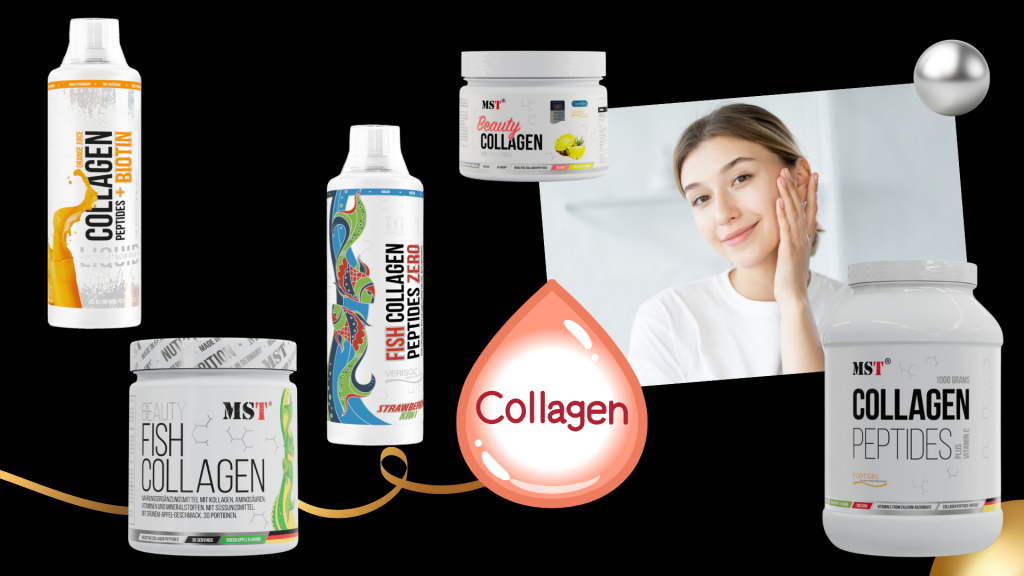
In the MST® Nutrition range, select products based on your specific operational target: targeted joint and ligament support, skin elasticity, or overall athletic recovery. Precision formulation and strict quality control provide a reliable tool for your daily athletic routine.
Integrating Collagen into a Real Training Strategy
For strength athletes, pair collagen intake with progressive, well-controlled mechanical loading. If your elbows flare up from excessive bench press volume or heavy triceps extensions, taking collagen alone won’t solve the problem. Re-evaluate your technique, training volume, grip width, warm-up routine, and heavy-day distribution. Supplements enhance a good program; they do not fix a flawed one.
For runners, avoid increasing volume and intensity simultaneously. Collagen can easily be integrated into your morning routine prior to runs, but your Achilles tendons and knees depend equally on targeted strength work for calves, glutes, and feet, proper footwear, and adequate rest.
For combat athletes and team sport players, managing cumulative impact is critical. Sparring rounds, acceleration bursts, hard falls, lifting sessions, and sleep deprivation accumulate rapidly. In these environments, daily collagen provides foundational support, but true longevity relies on holistic discipline: balanced nutrition, hydration, mobility work, periodized loading, and respecting physical warning signs.
Collagen supplementation works best for athletes focused on long-term sustainability. Choose a transparent, high-quality formula, take it consistently, maintain your strength training, and allow structured work over time to build a stronger, more resilient body ready for your next competitive challenge.